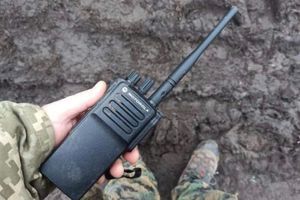
In modern warfare, important information can be obtained without ever seeing the adversary. A radio station, a drone controller, an aircraft transmitter or a radar leaves characteristic signals in the radio spectrum. Those signals can be detected and analysed; sometimes their direction or the location they come from can also be determined. This is the work of electronic intelligence (ELINT).
ELINT is often confused with electronic warfare (EW), while portable drone detectors are sometimes treated as universal devices that can “see everything”. In reality, detecting a signal, identifying its source, intercepting a transmission and decoding its information are very different things.

An important distinction. ELINT collects and analyses information from the electromagnetic environment. EW affects the operation of an adversary's electronic systems or protects friendly systems. These functions are related, but they are not the same.
What is electronic intelligence?
Electronic intelligence is the collection and analysis of information by receiving electromagnetic emissions. These may come from communications equipment, radar stations, unmanned aircraft control systems, navigation equipment and other electronic devices.
ELINT does not necessarily mean “listening to a conversation”. Even when the content of a message is unavailable, the fact that a transmission is taking place, its frequency and timing characteristics, signal type and repetition pattern can all be useful. Sometimes it is enough to establish that a radio station is active in a particular area or that a radar has switched on.
Professional terminology also includes signals intelligence (SIGINT), communications intelligence (COMINT) and electronic-support or electronic-intelligence disciplines. The exact boundaries depend on doctrine and organisational practice. The practical principle remains the same: receive a signal, analyse it and turn technical measurements into intelligence.
How electronic intelligence works
A radio transmitter produces electromagnetic radiation. An ELINT receiver detects signals within the frequency ranges it can monitor and passes them on for processing. Software and an operator assess their frequency, bandwidth, duration, repetition, modulation and other characteristics.
- Detection. The receiver registers a signal.
- Analysis. Its parameters are assessed and compared with other emissions.
- Classification. The signal's characteristics are used to estimate the likely type of transmission or equipment.
- Direction finding. An antenna system determines the direction from which the signal arrives.
- Location. Measurements from several separated stations can be compared to estimate the transmitter's position.
- Interpretation. Specialists compare the result with other information and draw an intelligence conclusion.
Not every system performs every stage. A compact detector may simply alert the user to a signal in a specified frequency band. A tactical direction finder adds bearing information. A larger complex combines receivers, antennas, operator workstations and software tools for analysis.
Direction finding does not automatically provide exact coordinates
Direction finding establishes the direction from which a signal is arriving. A single receiver will generally provide a bearing or sector, but not necessarily the transmitter's precise position. Location may require several separated stations, comparison of their measurements and consideration of their geometry. The result depends on radio-propagation conditions, signal stability and measurement accuracy.
What signals can ELINT detect?
- Communications equipment: tactical radios, repeaters, voice and data links.
- Uncrewed aircraft: control links, telemetry and video transmissions - provided the device emits a signal that the receiver can detect.
- Radar stations: radar emissions can have characteristic features that help with classification.
- Navigation and telecommunications equipment: various transmitters and network devices.
- Electronic-warfare equipment: active systems also emit signals that may be detected under suitable conditions.
Detecting a signal does not mean that the system will immediately identify the exact model of the device. The result is often a preliminary classification. A confident conclusion requires good measurements, a library of signal signatures, repeated observations and comparison with other sources.
Digital signals, encryption and the limits of interception
Seeing a transmission is not the same as reading the information it carries. In an analogue video link, the image is transmitted as a continuously varying signal. If a receiver is compatible with the format and receives the signal with sufficient quality, it may reproduce the picture. This is why some FPV signal detectors can do more than issue an alert: they can display analogue video.
In a digital system, information is transmitted as data. A receiver may detect the signal, assess its parameters and sometimes identify the protocol type. But if the data stream is encrypted, it will not automatically turn into understandable video or a readable message.
Without the key, ELINT may reveal that a transmission is taking place, its timing and technical characteristics and, where the equipment allows, the direction of the source. The content of encrypted data remains inaccessible. Obtaining the correct key may make the content available, but the receiver must also have captured the correct stream and use compatible equipment and decoding tools. A key is not a universal unlocker for every protocol.
For example: ELINT may detect a radio station and help determine the direction of its transmitter. But if the communications are protected by modern encryption, the operator will not necessarily be able to hear the conversation. Detection, interception and decryption are separate levels of access to information.
Frequency-hopping spread spectrum (FHSS) is a special case. The transmitter and receiver switch between frequencies according to a defined pattern. Detecting and processing such signals requires suitable receiver capabilities. FHSS support does not mean that every protected channel can automatically be decrypted.
ELINT and electronic warfare: what is the difference?
ELINT listens and analyses. It detects emissions, collects their characteristics, finds their direction and builds an intelligence picture. EW acts on the electromagnetic environment. It can create interference, disrupt communications or navigation, and protect friendly systems. ELINT can provide information for subsequent decisions, but it does not, by itself, jam or destroy a target.
ELINT in counter-drone operations
Many drones exchange radio signals with an operator or other devices. These may include a control link, telemetry or video transmission. If a signal falls within the receiver's frequency coverage, it may be detected and, under suitable conditions, analysed. This can provide an alert, help classify the activity or indicate the direction of the source.
However, not every drone continuously emits a signal that a portable detector can receive. An autonomous aircraft may follow a pre-programmed route. If there is no radio transmission, an RF detector will not detect the flight itself. Other sensors are needed for that, such as radar, optical, acoustic or combined systems.
Portable detectors: Tsukorok, Chuyka and alternatives
Portable detectors have become a notable part of Ukraine's experience in countering drones. These compact devices scan selected radio-frequency bands and alert the user to signals associated with certain types of unmanned aircraft. Their value lies in rapid local warning, not in replacing a full-scale electronic-intelligence station. For a practical comparison of popular devices and how they differ, see Oboronka's review of Ukrainian drone detectors.

Tsukorok: a compact detector that became well known at the front
Tsukorok became one of Ukraine's best-known portable detectors in 2024. Its basic idea is straightforward: a service member carries a compact device that warns of radio signals characteristic of a drone. The Sugar V model, according to reports on Australia's 2025 procurement of Ukrainian counter-drone equipment, weighs about 250 grams. It is an example of a development that gained attention in combat conditions and subsequently attracted interest from a foreign customer.
Chuyka: detection and video reception
Chuyka devices are designed to detect radio activity associated with drones. Depending on the model and configuration, some versions can also receive analogue FPV video. That is an important distinction: detecting the presence of a transmission and displaying its video content are not the same capability.
Chuyka 3.0 has been described in public technical material as a portable device for scanning selected bands and receiving compatible analogue video. Newer versions have expanded frequency coverage. The published specifications for Chuyka 4.5.0 describe simultaneous scanning across several ranges. These are model-specific capabilities, not a guarantee that the device can detect every drone or decode every digital link.
Dzyga, Vidik, TinySA and other devices
Dzyga, Vidik, TinySA and other devices are also mentioned in discussions of portable detection. They should not all be treated as equivalent products. Some are designed as purpose-built drone-warning devices; others are spectrum analysers or more general radio-frequency tools that can help a trained user inspect the spectrum. Their usefulness depends on frequency coverage, scan speed, antenna, software, signal type and the operator's ability to interpret what appears on the display.
SDR: software-defined radio
Software-defined radio (SDR) is a radio system in which many signal-processing functions are performed in software rather than being fixed entirely in dedicated hardware. Depending on the receiver, SDR can support flexible tuning, signal visualisation, recording and analysis across different frequency ranges and formats.
SDR is a technology approach, not a synonym for a drone detector. A portable detector may use SDR internally, but not every SDR device is a ready-made warning system. To turn a receiver into a useful tool, it needs suitable antennas, software, signal libraries, configuration and an operator who understands the data.
Larger ELINT complexes: Ukrainian systems and their capabilities
Portable detectors are only one level of the broader electronic-intelligence ecosystem. Ukraine also uses tactical direction finders, mobile complexes and automated monitoring systems. Their roles and specifications differ, so a comparison needs to account for the task each system is designed to perform.
Plastun-RP3000: a man-portable tactical direction finder
Plastun-RP3000, developed by Infozahyst, is a portable radio-monitoring and direction-finding system. The manufacturer's published specifications give a frequency range of 25-3000 MHz, real-time bandwidth of 21 MHz and a scanning speed above 2 GHz per second. The stated maximum direction-finding error is 0.5 degrees. The manufacturer also lists support for intercepting frequency-hopping signals.
The system is designed for mobile use: the published configuration can be deployed in up to 30 minutes, has a stated autonomy of up to eight hours and a man-pack weight of up to 39 kg. These are manufacturer specifications and should be read in the context of the particular configuration and operating conditions.
Khortytsia-M: a mobile complex with autonomous infrastructure
Khortytsia-M is a mobile communications-intelligence complex developed by Infozahyst. According to the manufacturer's description of Khortytsia-M, it covers 25-6000 MHz and can analyse signals across a wide bandwidth. The published specifications include up to 80 MHz of analysis bandwidth, five independent channels and a scanning speed of up to 60 GHz per second.
The complex is designed to search for, detect, classify and process radio signals, as well as support direction finding and emitter location. It can operate autonomously or as part of a network with other monitoring and direction-finding systems. The manufacturer says Khortytsia-M has been supplied to the Ukrainian Armed Forces since 2018. Published specifications describe a distance figure of approximately 45 km, but actual results depend on the signal, emitter, terrain, antenna configuration and radio visibility.
APELLA: an automated radio-intelligence post
APELLA is an automated radio-monitoring system within Infozahyst's product ecosystem. Its published capabilities include searching for and detecting signals, demodulation and processing of multiple frequency-hopping networks. The manufacturer states that it can process up to eight FHSS networks simultaneously and decode more than 50 signal types.
Automation reduces the amount of manual monitoring: the system scans the spectrum, registers signals and helps identify those that need attention. However, automated classification does not eliminate the need for specialist review. Similar technical characteristics do not always mean that two signals come from the same source.
Arkhont: mobile electronic intelligence at a broader level

Arkhont is a mobile electronic-intelligence complex developed by Infozahyst. In its report on the presentation of Arkhont, Defense Express describes it as a system for passive detection and analysis of emissions from radars, aircraft, helicopters, drones, naval platforms, air-defence systems and electronic-warfare equipment. Its passive operating principle means that it receives emissions from a target rather than illuminating it with its own radar pulse.
Public materials have cited a frequency range of 0.5-18 GHz and a claimed detection distance of up to 400 km. This is not a guaranteed range against every target. Results depend on the source's power and emission mode, altitude, radio horizon, antenna system and propagation conditions. Several stations can work together to improve location estimates.
Specialist publications have reported examples of Arkhont detecting emissions from particular radar systems and targets in the air and at sea. This is more meaningful than a general claim that a system “sees everything”, although the full list of operational results and details of its use are not public.
Kolchuga-M: a well-known Ukrainian passive system

Kolchuga-M is one of Ukraine's best-known passive electronic-intelligence developments. Unlike an active radar, it does not transmit a pulse and wait for an echo from a target. Instead, it receives signals already emitted by the electronic systems of aircraft, ships or ground-based objects.
Several separated receiving stations can be used to estimate the source's location by comparing their measurements. This is why Kolchuga is sometimes described as a “passive radar”, although technically it is not a conventional radar: it does not illuminate a target but receives the target's own emissions. Kolchuga-M was adopted by the Ukrainian Armed Forces in 2001.
Headline figures for maximum detection range should be treated with caution. Passive detection depends on whether the target emits a signal, whether there is radio line of sight, how powerful the transmitter is and how the receiving stations are arranged. A range figure for a high-altitude target does not imply the same range for a low-flying object.
Eter: a new networked intelligence system
In November 2025, reports described the deployment at the front of the Ukrainian Eter ELINT complex, developed by Falcons with support from Brave1. According to the public description, the system consists of three direction-finding units designed to detect communications, drone and electronic-warfare signals.
Published information states that Eter can operate automatically for up to 24 hours, detect frequency-hopping signals and connect several complexes into a network. The system has been described as mobile and modular, with damaged components replaceable. Its detection range has not been publicly disclosed, so a meaningful range comparison with other systems is not possible.
Why there is no simple “best system” ranking
Plastun is a tactical mobile direction finder; Khortytsia-M is a comprehensive mobile platform; APELLA is an automated monitoring post; Arkhont is a broader electronic-intelligence system; and Eter is a modular networked solution. These are different classes of equipment. Ranking them honestly would require a common test scenario and clearly defined criteria.
Maximum ranges from promotional materials should not be compared directly either. One figure may refer to a powerful radar at altitude, another to direction finding for a particular signal, and a third to a specific system configuration. A fair comparison requires the same target types, radio-visibility conditions and detection criteria.
Ukrainian developments: from individual devices to networks
Ukraine's experience shows ELINT developing at several levels. Personnel near the front need compact detectors for immediate warnings. Tactical teams need portable direction finders. At a higher level, mobile complexes and networks process more signals and distribute a consolidated intelligence picture.
Infozahyst's ecosystem includes Plastun, Khortytsia-M, APELLA, MINERVA and AURIS SDR receivers. The company is also developing unmanned electronic-intelligence solutions. Another approach is to combine ELINT and EW in Kvertus's Atlas system: MS Azimuth is responsible for detection and analysis, while Mirage performs electronic effects. This is not a single device doing everything, but a system made up of components with different functions.
Scaling up depends on more than manufacturing equipment. It also requires operators, analysts, training, maintenance, software updates and data exchange. As transmission methods change, keeping systems updated can be just as important as their original specifications.
What ELINT cannot do: key limitations
- It cannot detect objects that emit no accessible signal. RF-based ELINT is not a thermal camera or a radar.
- It cannot guarantee exact coordinates from one measurement. A single receiver may provide a bearing; location requires an appropriate method and geometry.
- It does not automatically decrypt protected communications. Intercepting a signal is not the same as accessing its content.
- It cannot identify every signal without error. Different devices can have similar technical characteristics.
- It cannot guarantee the same range in all conditions. Terrain, buildings, interference, antennas, altitude and transmitter power all matter.
- It does not replace EW, radar or optical surveillance. ELINT provides information; by itself, it does not jam or destroy a target.
Common myths about ELINT
Myth 1. ELINT can see every drone
No. It detects radio emissions, not the aircraft itself. If a drone does not transmit, operates in an unsupported band or its signal does not reach the receiver, the detector may not notice it.
Myth 2. If a signal is detected, the operator's exact location is known
Not necessarily. Detection confirms that a signal is present. Direction finding gives a bearing, while location requires additional measurements or several coordinated stations.
Myth 3. ELINT can listen to any radio station
No. Encrypted digital communications may remain unintelligible even after interception. Access to the content requires the key, compatible decoding equipment and a correctly captured data stream.
Myth 4. ELINT can jam a drone it has detected
No. Detection and analysis are ELINT functions. Creating interference is an EW function. The two may be integrated into one system, but they remain different capabilities.
Myth 5. Every signal in the sky belongs to an enemy drone
No. The radio spectrum is used by radio stations, telecommunications equipment, telemetry systems, civilian transmitters and many other devices. Classification and verification are essential.
Myth 6. The advertised detection range is guaranteed
No. Range depends on the transmitter, antenna, power, altitude, terrain, obstacles and receiver settings. A range figure should always be read together with the conditions under which it was obtained.
Myth 7. The more expensive and larger the system, the better it is
Not necessarily. A compact detector may be most useful for individual warning, a direction finder for a mobile team and a large complex for sustained monitoring. Comparing them without considering their intended tasks is misleading.
The future of ELINT: more data, automation and cooperation
The radio spectrum is becoming more complex: new protocols, digital links, frequency hopping and autonomous drones continue to appear. ELINT development is therefore moving towards wider frequency coverage, faster digital processing, SDR receivers, automated classification and networked sensors.
Artificial intelligence can help sort large volumes of signals and identify recurring patterns. But an algorithm does not make a conclusion infallible. High-quality data, analyst verification and context are still required. The real value is not simply receiving more signals, but turning them quickly into reliable information for decision-making.
ELINT helps protect what matters
ELINT operates where information is hidden in the radio spectrum. It helps detect activity, analyse signals and understand the electromagnetic environment. Behind every technology, however, are practical objectives: identify a threat in time, protect a unit, preserve equipment and give military personnel better information for their decisions.
This work matters far beyond the front line. Ukrainian cities live under the threat of attacks, and their protection depends on people, technology and the daily work of the Defence Forces. The Cities collection by Raccoon Merch is dedicated to Ukrainian places that have become symbols of resilience, memory and resistance. The names of cities on T-shirts, hoodies and patches represent more than geography: they stand for people, stories and the places the country is defending.
Explore the Cities collection on the Raccoon Merch website.
This article is for informational purposes. Specifications are based on publicly available manufacturer materials and specialist publications; they may vary by version, configuration and operating conditions. This article is not an instruction manual for deploying or using ELINT equipment in combat.
Electronic Warfare (EW): How It Works, Its Capabilities and Limitations
Structure of Ukraine’s Armed Forces and Defence Forces: From Squad to Corps
History of the Armed Forces of Ukraine: From the Creation of an Independent Army to Today
Military Intelligence of Ukraine - History, Development and Modern Role
Glock - The History of the Company and the Pistol That Changed Modern Handguns
Radio Communication Rules: Safety, Radio Discipline and Effective Communication
The History of Military Radio Communication: From Field Telephones to Modern Radios
The History of RadioMaster: How RadioMaster Transmitters Became a Standard for FPV Pilots
What to Give an FPV Pilot - Gift Ideas for an FPV Drone Pilot
What to Give a Commander or Officer - Gift Ideas for a Military Service Member
What to Gift a Soldier: 15 Meaningful Gift Ideas They'll Truly Appreciate