Military medicine has a history almost as old as warfare itself. Wherever people have fought, there have been wounded who needed help, evacuation and treatment.
Over thousands of years, the role of the military medic has changed dramatically. From ancient healers and Roman army physicians to mobile surgical teams, combat medics, tactical medicine and unmanned evacuation systems, military medicine has constantly adapted to the realities of war.
But one symbol has remained surprisingly familiar throughout this history - the serpent and the staff of Asclepius.
The Rod of Asclepius - Where the Symbol of Medicine Came From
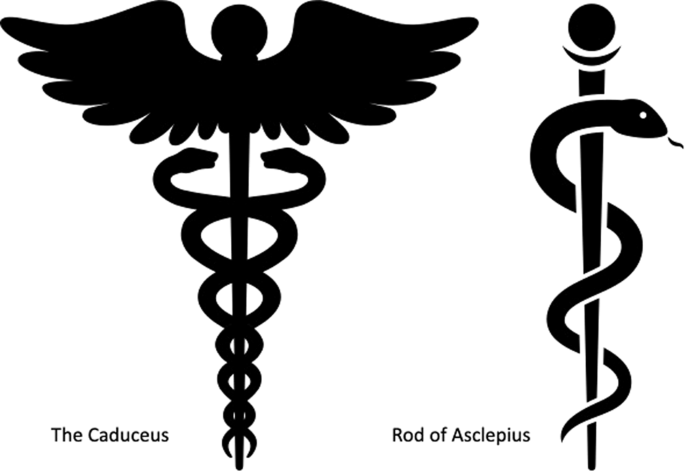
The Rod of Asclepius is one of the oldest and most recognizable symbols associated with medicine. It depicts a single serpent wrapped around a staff and is traditionally connected with Asclepius, the ancient Greek god of healing.
The serpent was associated with healing and renewal in the ancient world. Its ability to shed its skin was interpreted as a symbol of regeneration and recovery.
Historical research traces the medical use of the serpent symbol back more than two thousand years, with its association with Asclepius becoming particularly established in ancient Greece.
Research on the history of the Rod of Asclepius in PubMed
It is worth distinguishing the Rod of Asclepius from the caduceus - the staff with two snakes and wings. The two symbols have different historical origins, although the caduceus has also become mistakenly associated with medicine in some countries.
The First Military Medics
The need to treat wounded soldiers appeared as soon as organized armies appeared.
One of the most important early examples comes from the Roman army. By the time of Emperor Augustus, the Roman military had a developed medical organization, including dedicated army physicians.
Roman legions had medici legionis and medici cohortis. Large military camps could have dedicated medical facilities known as valetudinaria - essentially early military hospitals.
Roman military medicine also developed systems for providing first aid and transporting wounded soldiers.
This was an important change in the history of military medicine: treatment was no longer simply a matter of an individual healer helping a wounded person. It was becoming an organized military system.
Medicine on the Medieval Battlefield
Medieval battlefields were extremely dangerous places for wounded soldiers.
Medical knowledge was limited, surgery was primitive by modern standards, and infection was one of the greatest threats to survival.
Wounds were often treated with methods that today seem brutal - cauterization, amputation and various herbal or mineral preparations.
Yet some fundamental principles were already emerging. The wounded needed to be found, removed from danger and treated as quickly as possible.
The basic problem of battlefield medicine was already clear:
How do you save a wounded person when the battle is still going on around them?
Dominique Jean Larrey and the "Flying Ambulance"
One of the major turning points came during the French Revolutionary and Napoleonic Wars.
French military surgeon Dominique Jean Larrey developed the ambulance volante - the "flying ambulance".
The idea was simple but revolutionary: wounded soldiers should not have to wait until the battle was over. Specialized teams and mobile vehicles could reach the battlefield, collect wounded soldiers and transport them to medical facilities.
Larrey's system transformed battlefield evacuation and became an important foundation for modern military medical evacuation.
It introduced a principle that remains fundamental today:
Medical evacuation is part of the medical system, not simply transportation.
Solferino, Henry Dunant and the Red Cross
Another major transformation began with the Battle of Solferino in 1859.
Swiss businessman Henry Dunant witnessed thousands of wounded soldiers left without adequate medical assistance. His experience led him to write A Memory of Solferino, published in 1862.
Dunant proposed the creation of neutral organizations that could care for wounded soldiers regardless of which side they belonged to.
His ideas contributed to the creation of the International Committee of the Red Cross in 1863 and the adoption of the first Geneva Convention in 1864.
The red cross emblem became an internationally recognized protective symbol for medical personnel and facilities.
History of the founding of the International Committee of the Red Cross
This was a fundamental change in the concept of military medicine. Caring for the wounded was becoming not only a military responsibility, but also an international humanitarian principle.
Military Medicine in the 20th Century
The twentieth century brought enormous changes in military medicine.
World War I and World War II accelerated the development of surgery, anesthesia, blood transfusion, infection control and organized medical evacuation.
Blood transfusion became increasingly important for treating severe blood loss.
Antibiotics dramatically changed the treatment of infections.
Evacuation systems became faster, and aircraft eventually made it possible to transport seriously wounded patients over long distances.
Military medicine increasingly became a laboratory for technologies and procedures that later entered civilian healthcare.
From Military Doctor to Combat Medic
Modern warfare created another important development - the combat medic.
A combat medic is not simply a doctor working near the battlefield. The role requires a different set of skills.
A medic may have to provide life-saving care while under fire, work with limited equipment, make rapid decisions and move a casualty through an extremely dangerous environment.
This led to the development of modern tactical medicine.
The goal is not to provide a full hospital inside the battlefield. The goal is to perform the interventions that can keep a wounded person alive until more advanced medical care becomes available.
Tactical Medicine and TCCC
Modern tactical medicine is strongly associated with Tactical Combat Casualty Care - TCCC.
Its principles are built around the realities of combat rather than conventional hospital medicine.
One of the most important ideas is that medical treatment must take into account the tactical situation.
Sometimes the best medical decision is not to approach the casualty immediately because doing so could create additional casualties.
Hemorrhage control, airway management, breathing problems, prevention of hypothermia and rapid evacuation all became central elements of modern battlefield care.
Protocols such as MARCH helped organize these priorities into a practical sequence.

Ukraine and the Rapid Evolution of Military Medicine
The war in Ukraine has created an enormous amount of practical experience in modern military medicine.
The scale and intensity of the fighting, extensive drone use, long evacuation routes and constant threat to medical personnel have forced Ukrainian military medicine to adapt extremely quickly.
Some of these developments are particularly striking.
Blood Transfusion Closer to the Point of Injury
One of the important directions is bringing blood transfusion closer to the wounded soldier.
Instead of relying exclusively on evacuation to a hospital before transfusion, blood and blood components can be used at earlier stages of medical evacuation.
Ukraine has been developing systems for pre-hospital blood transfusion based on frontline experience.
This is especially important when a casualty has suffered massive blood loss and evacuation to a surgical facility may take significant time.
Medical Logistics by UAV
Drones are also becoming part of the medical supply chain.
Unmanned aerial vehicles can deliver medical supplies, blood products and other essential materials into areas where traditional transportation is extremely dangerous.
This changes the traditional relationship between logistics and the battlefield. A medical supply does not necessarily have to travel along the same roads as a conventional vehicle.
Casualty Evacuation by Ground Robots
Another major development is the use of unmanned ground vehicles for casualty evacuation.
In areas heavily monitored by drones, sending another person or vehicle to retrieve a wounded soldier can create additional risks.
Ground robotic systems can potentially enter these dangerous areas without putting another human life at immediate risk.
This is one of the clearest examples of how modern military technology is changing medical evacuation.
Forward Surgery
Surgical care is also being moved closer to the battlefield.
Forward surgical teams can perform urgent procedures relatively close to the line of contact, reducing the time between injury and definitive surgical treatment.
This continues a process that began with Larrey's mobile medical systems more than two centuries ago - moving medical capability toward the wounded rather than simply moving the wounded toward hospitals.
Prosthetics and Rehabilitation
Military medicine does not end with survival.
The enormous number of complex traumatic injuries has accelerated the development of prosthetics, rehabilitation and long-term recovery systems.
The modern military medical system therefore extends far beyond the battlefield - from the moment of injury through evacuation, surgery, rehabilitation and return to everyday life.

From the Rod of Asclepius to the Modern Combat Medic
The evolution of military medicine can look like a sequence of completely different technologies:
Ancient healer.
Roman military physician.
Medieval surgeon.
Larrey's flying ambulance.
Field hospital.
Blood transfusion.
Helicopter evacuation.
Combat medic.
Tactical medicine.
UAV medical logistics.
Ground evacuation robots.
But the underlying principle has remained remarkably consistent:
Find the wounded. Stop them from dying. Get them to the next level of care.
Technology changes the way this is done, but the purpose remains the same.
Symbols of the Modern Combat Medic
The Rod of Asclepius has survived for thousands of years because the connection between medicine and symbolism is unusually strong.
Modern military medicine has developed its own symbols as well.
The tourniquet has become one of the most recognizable symbols of contemporary tactical medicine. It represents the importance of rapid hemorrhage control and the knowledge that immediate action can save a life.
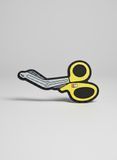
Trauma shears have a similar meaning. They are a simple tool, but they have become an integral part of the visual language of tactical medicine.
At Raccoon Merch, these ideas are represented in a collection of patches and silver jewelry inspired by tactical medicine - including designs based on a tourniquet and trauma shears.
Explore the Raccoon Merch Tactical Medicine collection
From Asclepius to the Robot
The history of military medicine is ultimately a history of bringing life-saving capabilities closer to the wounded.
Asclepius represented healing.
Roman military medicine organized it.
Larrey brought medical evacuation onto the battlefield.
Dunant helped establish international protection for the wounded and medical personnel.
Modern combat medics brought life-saving interventions directly into combat.
And today, drones and robotic systems are beginning to take some of the most dangerous parts of medical logistics and evacuation away from humans.
The technology may continue to change dramatically.
But the central idea remains the same as it was thousands of years ago:
Someone is wounded. Someone has to go and help.
What to Gift a Soldier: 15 Meaningful Gift Ideas They'll Truly Appreciate
What Should Be in a Soldier's Individual First Aid Kit? A Simple Guide to Modern Tactical Medicine
Trauma Shears: History, Purpose, and Why They Have Become a Symbol of Modern Tactical Medicine
Tourniquet: History, Evolution, and Why It Has Become a Symbol of Modern Tactical Medicine
MARCH Protocol: How the Modern Standard of Tactical Medicine Was Created and Why It Saves Lives
What to Give a Military Medic: 17 Gift Ideas for Combat Medics, Paramedics and Tactical Medics
What to Give a Commander or Officer - Gift Ideas for a Military Service Member
Personal Body Armor: History, Evolution and the Path from Chainmail to Modern Plate Carriers