Few pieces of military equipment carry as much meaning as the military dog tag.
At first glance, it is simply a small metal tag containing basic information about a service member. Yet over more than a century, it has evolved into something far greater than an identification tool.
For some, it represents military service.
For others, it symbolizes brotherhood.
For many veterans, it serves as a lasting reminder of one of the most defining chapters of their lives.
Today, military dog tags are recognized around the world as one of the most iconic symbols of military culture.
Why Were Military Dog Tags Created?
For most of history, armies had no reliable way to identify fallen soldiers.
After major battles, thousands of casualties often remained unidentified, leaving both military authorities and families without answers.
This problem eventually led to the creation of personal identification tags.
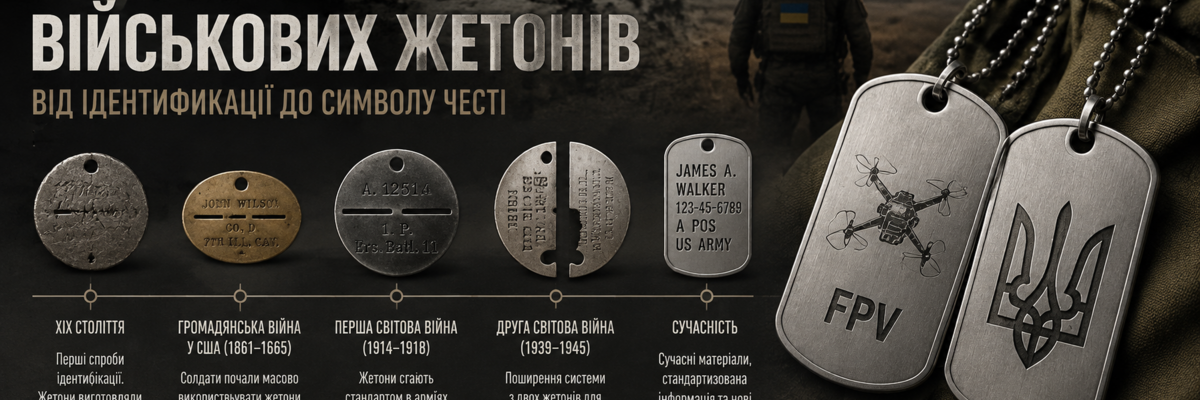
One of the earliest large-scale examples came during the American Civil War, when many soldiers purchased or made their own identification tags, engraving their names, military units, and other personal details.
Over time, official military organizations adopted standardized identification tags, and they gradually became part of military equipment across the world.
From Homemade Tags to Standard Military Equipment
By the late 19th and early 20th centuries, many European armies had introduced their own military identification systems.
During World War I, identification tags became standard equipment for soldiers in most major armies.
Throughout World War II, dog tags continued to evolve as military organizations standardized their designs and the information they carried.
Today, nearly every modern military issues its own version of an identification tag.
Why Are Dog Tags Worn Around the Neck?
Different carrying methods have existed throughout history, but wearing dog tags on a chain around the neck proved to be the most practical.
This approach offers several advantages:
-
the tag stays with the service member at all times;
-
it is difficult to lose accidentally;
-
it does not take up space in pockets or equipment;
-
it can be located quickly when needed.
For these reasons, the basic method of wearing military identification tags has changed very little for more than a century.
Why Did Many Armies Use Two Dog Tags?
Many military organizations issued two identical identification tags to each service member.
If necessary, one tag remained with the individual while the second was used for military records and casualty reporting.
Some modern systems follow the same principle in a different way.
Instead of issuing two separate tags, they use a single tag with a perforation or break line. When required, it can be separated into two identical halves, each containing the essential identification information.
This solution combines practicality with a compact design.
What Information Is Included on a Military Dog Tag?
The earliest military tags contained only the most essential information:
-
name;
-
service number.
As military medicine and administrative systems evolved, additional information was added.
Depending on the country and military regulations, modern identification tags may include:
-
service number;
-
full name;
-
blood type;
-
Rh factor;
-
emergency contact information;
-
military unit;
-
branch of service;
-
other official service-related information.
The exact format varies between different armed forces.
What Are Military Dog Tags Called Around the World?
Although they serve the same purpose, military identification tags are known by different names in different countries.
The best-known nickname is Dog Tags, largely thanks to American military culture and Hollywood films.
However, Dog Tags is an informal American nickname. The official U.S. military term is Identification Tags.
Other countries use different names:
-
United States - Identification Tags, commonly known as Dog Tags.
-
United Kingdom - Identity Discs.
-
Germany - Erkennungsmarke.
-
France - Plaque d'identité militaire.
-
Ukraine - Military Identification Tag.
Despite differences in terminology and design, their purpose remains the same: identifying service members and preserving essential personal information.
Why Do Military Dog Tags Come in Different Shapes?
The earliest military identification tags had no universal design.
Over the years, many different shapes have been used, including:
-
round;
-
oval;
-
rectangular;
-
hexagonal;
-
octagonal;
-
rectangular tags with clipped corners;
-
break-apart designs.
Eventually, the rectangular shape with rounded corners became the most widely adopted.
It proved to be simple to manufacture, comfortable to wear, and large enough to hold all the necessary information.
Even today, different countries continue to use their own standards for size, shape, and engraving.
Military Dog Tags Today - More Than Identification
Today, military dog tags represent much more than official identification.
For many active-duty personnel and veterans, they symbolize military service, shared experiences, and lifelong friendships.
Many continue wearing their tags long after leaving the military, not because regulations require it, but because the tags have become deeply personal reminders of their service.
This is also why military-inspired dog tags have become meaningful pieces of jewelry, representing memory, respect, and belonging rather than official identification.
Military Dog Tags in Ukraine
Military identification tags are an essential part of every Ukrainian service member's equipment.
Since 2014, and especially following Russia's full-scale invasion of Ukraine in 2022, these tags have gained an even deeper symbolic meaning.
For many Ukrainian soldiers, veterans, and volunteers, the military tag has become a symbol of service, resilience, and remembrance.
Its familiar shape now appears not only in official military equipment but also in commemorative jewelry and symbolic accessories.
Why Do Soldiers Wear Dog Tags Outside Their Shirts in Movies?
In many war movies, soldiers wear their dog tags outside their shirts where they are clearly visible.
In real life, this is far less common.
Most service members wear their tags underneath their clothing.
This protects the tags from damage, prevents unnecessary noise, reduces the risk of snagging on equipment, and makes them more comfortable during daily use.
In film, visible dog tags have become a visual shortcut that immediately tells the audience a character is a soldier.
Military Dog Tags by Raccoon Merch
At Raccoon Merch, our military-inspired dog tags are not replicas of official identification tags.
Instead, they are symbols inspired by modern Ukrainian military culture.
Our FPV Dog Tag honors drone operators whose skills have transformed modern warfare.
Interesting Facts About Military Dog Tags
-
The earliest military identification tags were often handmade by soldiers themselves.
-
Different countries still use different shapes, sizes, and engraving standards.
-
The nickname Dog Tags is informal and primarily associated with the United States.
-
Some modern military tags are designed to separate into two identical halves when necessary.
-
Despite advances in DNA technology, military identification tags remain an important part of military equipment around the world.
Conclusion
A military dog tag has never been just a piece of metal.
For some, it represents military service.
For others, it preserves memories of comrades.
For many, it serves as a reminder of experiences that changed their lives forever.
More than a century after their introduction, military dog tags remain one of the most recognizable symbols of military service around the world.