Winchester is one of the most recognizable names in the history of firearms. For many people, the name is associated with a lever-action rifle, the American frontier and classic Western movies. But the history of Winchester is much broader. Over more than 150 years, the company has produced a wide range of rifles, shotguns and ammunition, while its designs have played an important role in both civilian and military firearms history.
From the first rifle to carry the Winchester name to the modern Model 70, Model 1894 and other firearms, the brand has gone through a long process of development. At the same time, the classic lever-action Winchester remains one of the most recognizable symbols of American firearms.
How Winchester Began
The history of Winchester began before the Winchester Repeating Arms Company itself existed.
In 1857, Oliver Fisher Winchester acquired a controlling interest in the Volcanic Repeating Arms Company. The company was working on repeating firearms, and Benjamin Tyler Henry was among the people involved in their development.
Henry later developed his famous Henry rifle. Its design became an important step in the development of practical lever-action repeating firearms.
On May 22, 1866, Oliver Winchester established the Winchester Repeating Arms Company. That same year, the Model 1866 appeared - the first firearm to carry the Winchester name. Winchester's official history identifies it as the "Yellow Boy", a name associated with its polished brass receiver.
Winchester Model 1866 - The Beginning of the Legend
The Winchester Model 1866 was developed from the earlier Henry rifle design, but included important improvements.
Its defining feature was the lever-action mechanism. After a shot was fired, moving the lever operated the action, ejecting the spent cartridge case and loading the next round. This allowed the shooter to fire again much more quickly than with many single-shot rifles of the period.
The Model 1866 used a tubular magazine and featured its distinctive brass receiver. These characteristics quickly made it recognizable among shooters and later helped establish its place in popular culture.
The Model 1866 was the beginning of Winchester's rise as one of the best-known American firearms manufacturers.
Winchester Model 1873 - "The Gun That Won the West"
In 1873, Winchester introduced the Model 1873.
This rifle became one of the most important symbols associated with the Winchester name. It was initially chambered for the .44-40 WCF cartridge and was later offered in other chamberings.
The Model 1873 proved particularly well suited to life on the American frontier. A relatively compact rifle with a repeating action and substantial magazine capacity could be useful for hunting, farm life and general protection.
Winchester itself describes the Model 1873 as the "Gun That Won the West", and more than 700,000 were produced.
The phrase should nevertheless be understood as a historical and marketing expression rather than a literal description of how the American West was settled. The development of the frontier was a much more complicated historical process than the story of any single firearm.
Why Winchester Became a Symbol of the American West
Winchester's growing popularity coincided with the expansion of the American West.
Settlers, farmers, hunters and travelers needed firearms that could fire multiple rounds without requiring manual loading after every shot. Lever-action rifles were well suited to this requirement.
Winchester firearms therefore became closely associated with frontier life.
Cinema later strengthened this connection. Western movies turned the lever-action Winchester into one of the most recognizable symbols of the American frontier. Models such as the Model 1873 and Model 1892 became especially familiar to audiences around the world.
As a result, Winchester became much more than a firearms brand. It became part of the cultural image of the American West.
John Browning and Winchester
John Moses Browning occupies a special place in Winchester's history. He was one of the most influential firearms designers of his era, and his cooperation with Winchester produced several important designs.
Among them was the Model 1886, developed for more powerful cartridges. Later came the Model 1892, which became another iconic lever-action rifle associated with the American West.
The Model 1886 demonstrated that a lever-action mechanism could be made strong enough for powerful rifle cartridges. This significantly expanded the practical possibilities of the lever-action design.
Winchester later moved far beyond lever-action firearms, developing bolt-action, semi-automatic and other systems as firearms technology changed.

Winchester Model 1894 and the .30-30 Winchester
In 1894, Winchester introduced the Model 1894, one of the most important rifles in the company's history.
The rifle became particularly successful because it combined a compact lever-action design with the emerging generation of smokeless-powder ammunition. In 1895, Winchester introduced the .30-30 Winchester cartridge, which went on to become one of the best-known American hunting cartridges.
The Model 1894 became extremely popular among hunters. Its relatively compact dimensions, manageable weight and fast lever action made it particularly useful in wooded hunting environments.
Winchester's historical timeline identifies the Model 1894 as the best-selling centerfire rifle in U.S. history.
Winchester Model 1895 - A Different Kind of Lever-Action Rifle
The Model 1895 represented a significant departure from the traditional Winchester design.
Instead of a tubular magazine beneath the barrel, it used an internal box magazine. This allowed the rifle to use more powerful cartridges with pointed bullets, which were not well suited to traditional tubular magazines because of how cartridges are positioned inside them.
The Model 1895 was produced in several chamberings, including .30-40 Krag, .303 British, .30-06 Springfield, .405 Winchester and 7.62×54mmR.
It became one of the most important military versions of a Winchester lever-action rifle.
Winchester Model 1895 and World War I
The largest military contract associated with Winchester's lever-action rifles involved the Model 1895.
During World War I, the Russian Empire faced a serious shortage of small arms. Winchester received an order for large numbers of Model 1895 rifles chambered for the Russian 7.62×54mmR cartridge.
The military version was adapted for service use. It featured changes including a longer barrel, bayonet provisions and a system compatible with the military ammunition used by the Russian army.
The Model 1895 therefore became more than an American frontier rifle. Large numbers entered military service and were used on the Eastern Front during World War I.
Its history is also connected to the territory of modern Ukraine. Rifles produced for the Russian Empire were present on different fronts during World War I, and some continued to circulate during later conflicts.
Winchester and Military History
Although Winchester is now often associated primarily with hunting, its military history is substantial.
The Model 1895 is one of the best-known examples of Winchester's military work, but it was not the only one. The company also produced other firearms and participated in major military contracts during different periods of the 20th century.
This is an important part of Winchester's history because the company did not develop solely around the civilian firearms market. Its designs evolved alongside changing military requirements, ammunition technology and manufacturing methods.
Winchester Model 70 - The Move Toward the Modern Rifle
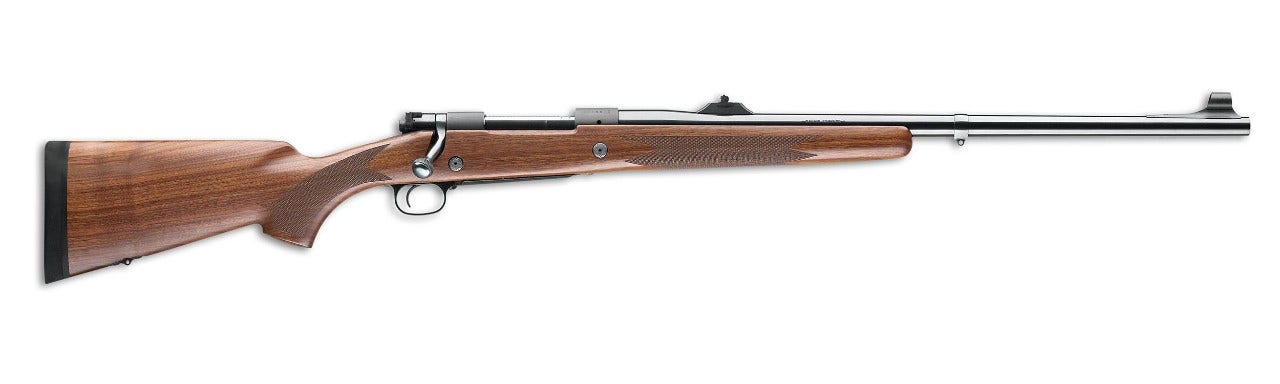
In 1936, Winchester introduced the Model 70.
This was a very different concept from the classic lever-action rifles. The Model 70 used a bolt-action mechanism and quickly became well known among hunters for its accuracy, reliability and availability in a wide range of powerful rifle cartridges.
The rifle became known as the "Rifleman's Rifle".
The Model 70 illustrates how dramatically Winchester had evolved. The company was no longer limited to the lever-action rifles that had made its name famous. It was developing modern firearm designs for a changing market. Winchester continues to describe the Model 70 as an iconic bolt-action rifle.
Winchester and Ammunition
The history of Winchester is closely connected not only with firearms but also with ammunition.
The Winchester name appears in the names of several famous cartridges, including .30-30 Winchester, .270 Winchester and .308 Winchester.
The .308 Winchester, introduced in 1952, became especially important. It gained widespread use among hunters and sport shooters and eventually became one of the world's best-known rifle cartridges.
It is important, however, not to automatically equate .308 Winchester with 7.62×51mm NATO. The cartridges are very closely related in dimensions and performance, but they belong to different standards.
The distinction between a cartridge designation and a manufacturer is also important. A cartridge called .308 Winchester is not necessarily manufactured by Winchester. Different ammunition companies produce ammunition in this chambering.
.308 Winchester in Ukraine
.308 Winchester ammunition is definitely used in Ukraine.
The cartridge is used in modern rifles employed by Ukrainian military and security personnel, including rifles chambered for this cartridge.
At the same time, the name ".308 Winchester" identifies the cartridge rather than its manufacturer. A .308 Winchester round can therefore be produced by a company other than Winchester.
This distinction is important when discussing the use of Winchester products in Ukraine. The fact that .308 Winchester ammunition is used in Ukraine does not automatically mean that the ammunition was manufactured by Winchester, nor does it prove that a particular Winchester rifle is in official military service.
Are Winchester Rifles Used in Ukraine Today?
The situation is different when it comes to the firearms themselves.
There is no sufficient official confirmation that specific Winchester rifle models are part of the standard-issue armament of the Armed Forces of Ukraine.
That does not mean that Winchester rifles are not present in Ukraine or cannot be used by Ukrainian servicemen.
Individual Winchester firearms can be used as personal weapons, acquired or received outside the standard weapons issued to a military unit. Therefore, it is reasonable to discuss the presence and possible personal use of individual Winchester rifles without describing Winchester as standard-issue equipment of the Ukrainian military.
The distinction is important because documented use of a firearm by individual personnel is not the same thing as official adoption of that firearm as a standard military weapon.
Winchester Today
Today, Winchester is much more than the legendary rifles of the 19th century.
The brand continues to produce rifles, shotguns and ammunition. Classic lever-action models remain an important part of Winchester's heritage, while the company also offers modern bolt-action and other firearm designs.
The current Winchester lineup includes modern versions of historically important models, including the Model 1873, Model 1886, Model 1892, Model 1894 and Model 1895. Winchester also continues to offer the Model 70 and other modern rifles.
The history of the brand therefore did not end with the American frontier. Winchester continues to exist as an active firearms and ammunition manufacturer while maintaining a strong connection to its historical designs.
Firearm Maintenance and Care
Whether the firearm is a modern rifle, a hunting gun or a historic Winchester, proper maintenance remains an important part of responsible ownership and use.
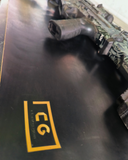
A dedicated cleaning surface can make firearm maintenance more convenient while protecting a workbench from oil, dirt and contact with metal parts. Clarity Gun firearm cleaning mats are designed for this purpose and are available on the Raccoon Merch website.
Winchester as Part of Firearms History
The history of Winchester shows just how much firearms technology has changed over the last century and a half.
In the 19th century, one of the major advantages of a repeating rifle was the ability to fire several rounds without manually reloading after every shot. This was one of the reasons lever-action Winchester rifles became so successful.
Later came smokeless powder, new cartridges, box magazines, bolt-action systems and many other technological developments.
Yet the classic Winchester image has survived.
The Model 1873 became a symbol of the American frontier, the Model 1894 became one of the best-known hunting rifles in American history, the Model 1895 demonstrated the military potential of the Winchester lever-action system, and the Model 70 represented the company's move toward modern bolt-action rifles.
That is why Winchester is more than simply the name of a firearms manufacturer.
It is a brand whose history reflects an entire era of firearms development - from the first practical repeating rifles to modern firearms and ammunition.
Mauser: The History of a Rifle That Became a Global Standard
The History of Smith & Wesson: From the First Cartridge Revolver to Magnum
Heckler & Koch: The History of German Firearms That Became Legendary
Glock - The History of the Company and the Pistol That Changed Modern Handguns
Colt: The History of the Company That Changed the World of Firearms
What to Give a Commander or Officer - Gift Ideas for a Military Service Member
Clarity Gun Rubber Cleaning Mat — Instructions & Care
What to Gift a Soldier: 15 Meaningful Gift Ideas They'll Truly Appreciate