The name Mauser is familiar to almost anyone interested in the history of firearms. But Mauser is more than the name of a German manufacturer. Over time, it became associated with an entire family of rifle designs that influenced military firearms around the world.
The story began with two brothers, Wilhelm and Paul Mauser. Their work eventually led to the creation of the Mauser 98 system - one of the most influential bolt-action rifle designs in history.
The Mauser Brothers and the Beginning of the Company
Wilhelm and Paul Mauser came from a family connected with the royal arms factory in Oberndorf am Neckar, Württemberg. The brothers began developing their own firearm designs in the second half of the 19th century.
Their early work focused on bolt-action rifles. At the time, military firearms were rapidly changing. Armies were moving away from muzzle-loading weapons toward breech-loading rifles, and the ability to load and fire a weapon more efficiently was becoming increasingly important.
One of the company's first major successes was the Model 1871. In 1871, Prussia adopted the Mauser rifle as the new standard infantry rifle, giving the brothers an important military contract and establishing their reputation.
A detailed account of the brothers' early work and the development of their company can be found in American Rifleman - Wilhelm and Paul Mauser: Rx for Success in Rifle Making.
From Germany to the International Market
The success of the early Mauser rifles did not remain limited to Germany.
During the late 19th century, Mauser actively entered international military markets. Serbia and the Ottoman Empire became important customers, and the Ottoman Empire placed particularly significant orders for Mauser rifles and carbines.
This international demand was important for the future of the company. Mauser was no longer simply producing rifles for the German military market. Its designs were becoming part of the rapidly developing international arms industry.
This was also the period when the distinction between a manufacturer and a firearm design became increasingly important.
A rifle could be designed by Mauser, manufactured elsewhere, produced under license, or developed by another manufacturer using the Mauser system as its starting point.
That distinction would become especially important after the appearance of the Mauser 98.

The Gewehr 98
In 1898, the German Army adopted the Gewehr 98.
It was based on the Mauser bolt-action system and became the standard German infantry rifle. The rifle entered service at a time when military firearms were undergoing another major transformation, including the widespread adoption of smokeless powder and smaller-caliber high-velocity cartridges.
The Gewehr 98 became one of the defining German military rifles of the First World War.
The Australian War Memorial provides a detailed historical record of the Gewehr 98 and its military use: Australian War Memorial - Gewehr 98.
But the importance of the Gewehr 98 goes beyond its role in the German Army.
Its action became the foundation for one of the most influential bolt-action rifle systems ever developed.
Mauser 98 - A Design That Outlived Its Era
The Mauser 98 action became famous for its combination of strength, controlled feeding and a robust bolt design.
The important point is not simply that the rifle was successful in its own time. Its basic mechanical concept proved adaptable enough to remain relevant for decades.
The Mauser 98 system became a reference point for military rifles, sporting rifles and hunting rifles.
Different manufacturers subsequently produced rifles based on the Mauser 98 system or developed designs influenced by it. Some were directly connected to Mauser production or licensing, while others were independent developments based on the same general design principles.
This is why the word "Mauser" can sometimes be confusing in historical discussions. A rifle may have a Mauser action without having been manufactured by the Mauser company itself.
An overview of the international development and variations of the 98 system is provided by American Rifleman - A Study of the Mauser 98.

Mauser Carbines and Military Service
Mauser was not limited to full-length infantry rifles.
The company also produced shorter military rifles and carbines for different military customers. These weapons were intended for situations where a more compact firearm was useful, including cavalry and other troops whose role made a shorter rifle more practical.
Later, the German military adopted the Karabiner 98k in 1935.
Despite its name, the 98k was not simply a commercial Mauser rifle. It was a German military service rifle produced by a number of manufacturers.
The Karabiner 98k became the standard German infantry rifle during the Second World War, and millions were produced.
Its history illustrates an important feature of the Mauser story: by that point, the 98 system had become much larger than the original factory that created it.
Mauser Beyond Germany
The international influence of the Mauser system became particularly visible during the 20th century.
Rifles based on Mauser designs were produced in Belgium, Czechoslovakia, Poland, Spain, Yugoslavia, China and other countries.
In some cases, production was connected to licensing or cooperation. In others, national arsenals and manufacturers developed their own versions based on the Mauser action.
This resulted in a large family of rifles that could look quite different from one another while sharing important elements of the same design heritage.
For military arsenals, this was significant. A proven bolt-action system could be adapted to local manufacturing capabilities, ammunition standards and military requirements.
As a result, the Mauser 98 became not simply a German rifle design, but one of the foundations of the international bolt-action rifle tradition.
Why the Mauser 98 Was So Influential
There was no single reason for the success of the Mauser 98.
Its influence came from a combination of factors.
First, the action was robust and suitable for military use.
Second, the design was adaptable. Different manufacturers could produce their own versions while retaining the fundamental concept.
Third, the system became associated with a proven military reputation.
And finally, the same basic action proved useful outside the military sphere.
That last point was especially important.
Many military technologies disappear when their original purpose disappears. The Mauser 98 was different. Its design found a second life in sporting and hunting firearms.
From Military Rifles to Hunting Guns
After the First World War, the development of military firearms continued rapidly. Semi-automatic and later automatic weapons gradually changed the role of the traditional bolt-action rifle.
But the Mauser action did not disappear.
Instead, it became particularly important in hunting and sporting firearms.
Hunters and sporting shooters valued characteristics that had originally made the system attractive for military use: strength, reliability and a well-established design.
The transition from military production to sporting firearms helped keep the Mauser name relevant long after the original military rifles had become historical objects.
Mauser During the Second World War
The Second World War brought Mauser and the 98 system back into the center of military production.
The Karabiner 98k became the standard German service rifle, while several manufacturers contributed to its production.
At the same time, Mauser's industrial history during the Third Reich was closely connected with Germany's wider armaments industry and wartime production.
This period is therefore an important part of the company's history, but it should be viewed in the broader context of German military-industrial production rather than treating every 98k as a rifle produced directly by the Mauser factory.
Mauser in the Modern Era
The Mauser name survived the transition from the age of mass military bolt-action rifles to the modern sporting firearms industry.
Today, the Mauser brand is primarily associated with hunting rifles and sporting firearms rather than the mass production of military rifles.
The modern company continues to build on the Mauser heritage while developing contemporary firearms for hunters and sporting users.
The official history of the modern company is available on Mauser's official website.
The Legacy of Mauser
The most interesting part of the Mauser story is that the company created something larger than a successful product line.
The Mauser 98 became a design reference.
Its influence can be seen in military rifles produced in different countries, in national arsenals that adapted the system to their own requirements, and in sporting rifles that continued using the basic concept long after bolt-action military rifles had ceased to be the dominant infantry weapon.
That is why "Mauser" can mean several different things depending on the context: a German manufacturer, a particular rifle, a family of military firearms, or a design system that influenced generations of rifles around the world.
For anyone interested in firearms history, Mauser is therefore not just the story of one company. It is a story about how a successful engineering design can cross national borders, move between military and civilian applications, and remain relevant for more than a century.
Caring for Historical and Modern Firearms
The history of Mauser also reminds us that a firearm is not simply a historical object or a mechanical design. Proper maintenance has always been an important part of firearm ownership and care.
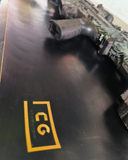
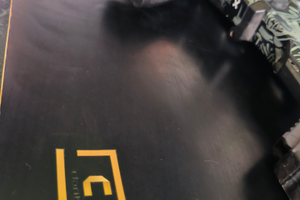
For collectors and owners who work with firearms in an appropriate and safe environment, a dedicated cleaning surface can help protect the work area and keep small components organized. For example, Raccoon Merch offers the Clarity Gun rubber gun-cleaning mat.
The Mauser story ultimately demonstrates why some firearm designs become historical landmarks. Their importance is not limited to the period in which they were created. When a design proves adaptable enough to be manufactured, modified and used by different countries and generations, it becomes part of the broader history of firearms engineering.
What to Gift a Soldier: 15 Meaningful Gift Ideas They'll Truly Appreciate
Clarity Gun Rubber Cleaning Mat — Instructions & Care
Glock - The History of the Company and the Pistol That Changed Modern Handguns
What to Give a Commander or Officer - Gift Ideas for a Military Service Member
Česká zbrojovka: From a 1936 Arms Factory to the CZ BREN 2
SIG SAUER: From a Swiss Factory to One of the World's Best-Known Firearms Manufacturers
Heckler & Koch: The History of German Firearms That Became Legendary
The History of Smith & Wesson: From the First Cartridge Revolver to Magnum