When people think of pickup trucks in war, they often picture the same scene: an off-road vehicle with a machine gun mounted in the bed, speeding across rough terrain. But that is only one, and by no means the most complete, part of the military pickup story. Far more often, a pickup carries water, batteries, tools, spare parts, medical equipment, people and all the other things a unit needs to keep functioning.
A pickup does not replace an armoured personnel carrier, an ambulance or a heavy-duty truck. Its value lies elsewhere: it is a relatively compact vehicle with a passenger cab and an open cargo bed that can be adapted to a wide range of support tasks. In modern warfare, where units are dispersed and requirements change from day to day, this versatility matters.

From civilian vehicle to military transport
Pickup trucks were not designed exclusively for the military. Their traditional role has been as working vehicles for farmers, builders, service crews, businesses and anyone who needs to carry loads where an ordinary passenger car is not particularly practical. The combination of a passenger cab and a separate cargo bed also proved useful to military forces.
In military service, pickups perform a range of roles, from everyday transport and supply runs to serving as mobile platforms for specialist equipment. They became especially visible in conflicts where regular armed forces operated alongside light, mobile formations that needed affordable vehicles capable of moving people and cargo quickly.
During the 1980s, Toyota pickups became so prominent in the Chadian-Libyan conflict that the 1987 campaign entered history as the "Toyota War". The War on the Rocks article on the pickup-truck era of warfare describes how light vehicles became an important mobility tool in conflicts in Chad, Somalia, Iraq, Afghanistan and Libya. The term "technical" is often used in this context for a civilian or commercial vehicle adapted for military use, sometimes with specialist equipment installed.
But the image of a "technical" should not overshadow the rest of the story. For many military units, a vehicle's primary job is to deliver essential supplies, pick people up, bring tools or help carry out routine logistical and technical work.
A pickup at war is much more than a machine-gun truck
The versatility of a pickup is best understood not through a list of technical specifications, but through the everyday tasks it performs. The same model can have very different roles in different units. Today it may be a supply vehicle; tomorrow, transport for a repair team; in another configuration, a platform for carrying specialist equipment.
1. Logistics: water, food, equipment and everything else a unit needs
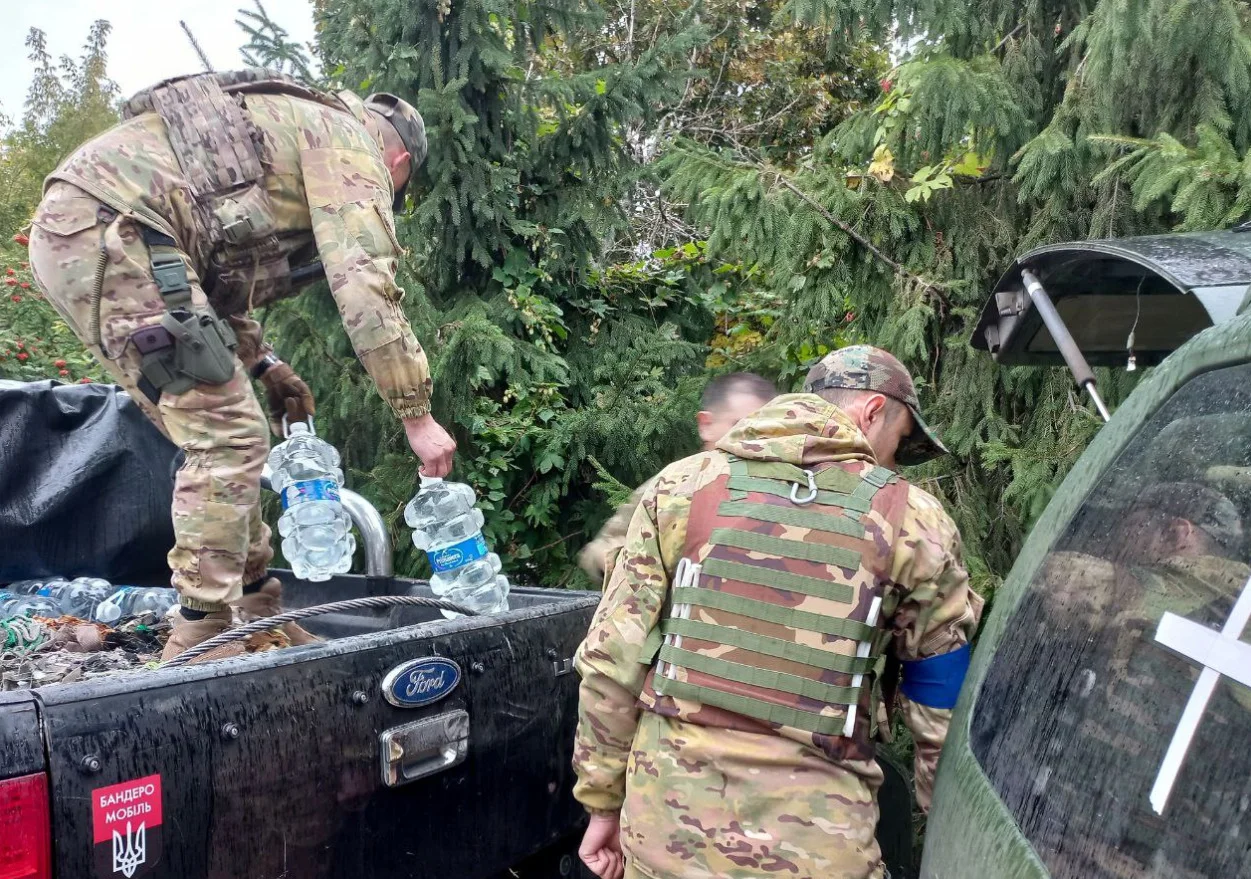
One of the most obvious, yet most important, roles is delivery. Units constantly need drinking water, food, clothing, hygiene supplies, batteries, chargers, cables, tools, spare parts and countless small items that rarely feature in stories about military hardware.
Not every delivery requires a large truck. Sometimes a relatively small load needs to be delivered, several stops need to be made, or cargo has to reach a place where a larger vehicle would be impractical. A pickup combines a passenger cab with a bed for boxes, containers, crates and equipment.
An open bed also comes with practical requirements: cargo must be distributed properly and secured, while items sensitive to moisture, dust or impact need suitable packaging or an enclosed module. That is why pickups in service can be seen with open beds, canopies, tonneau covers or purpose-built bodies.
2. Medical evacuation: when the ability to move a casualty matters
A pickup can be used to transport wounded personnel, medics and medical supplies. Its advantage is the ability to move people and equipment quickly and, with an appropriate configuration, provide space for transporting a patient. However, an ordinary pickup does not become a fully equipped ambulance simply because it is used for evacuation.
A purpose-built medical vehicle must account for stretcher restraints, medical staff access to the patient, protection from weather, lighting, heating and room for equipment. A standard pickup with an open cargo bed does not provide these conditions. A pickup can therefore serve as auxiliary evacuation transport, but its capabilities and limitations need to be assessed separately.
This distinction matters: military medical evacuation involves different stages and different vehicle types. A pickup may help where rapid transport is needed, but it should not be treated as a substitute for a properly equipped medical vehicle.
3. Supporting unmanned-aircraft teams

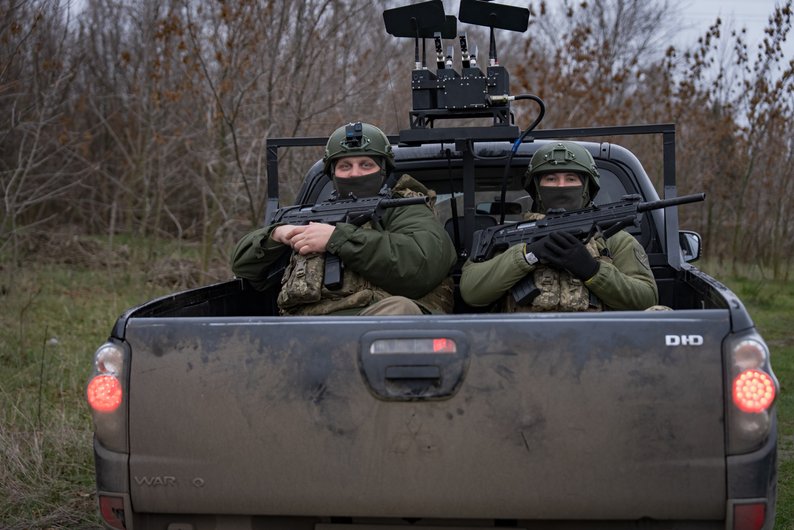
A modern UAV unit is more than an operator with a controller. Its work requires vehicles, batteries, chargers, generators, cables, antennas, computers, tools, spare components and other equipment. Some of this kit must be moved between work locations, taken for servicing or replaced.
A pickup can transport both personnel and the equipment they need. The enclosed cab protects some of the kit from the weather, while the cargo bed can carry larger items. For these tasks, what matters is not how impressive the vehicle looks, but its capacity, electrical reliability, ease of loading and ability to keep equipment in working order.
This role has become so important that Ukraine's Ministry of Defence explicitly included support for UAV crews among the needs covered by its pickup procurement programme.
4. Mobile repair: a workshop that comes to the equipment

Equipment needs maintenance wherever it operates. Wheels, tyres, suspension, electrical systems, filters and other components wear out. A fault does not always mean that a vehicle or piece of equipment has to be sent far to the rear.
This is where the idea of a mobile workshop comes in. A pickup can be equipped as a compact service vehicle with a generator, compressor, welding equipment, tools, spare materials and storage compartments. It cannot replace a full repair facility, but it can make some maintenance work possible closer to where it is needed.
Ukraine's Ministry of Defence has reported the approval for service of a Ukrainian mobile vehicle-repair workshop that can be installed on the chassis of various four-wheel-drive pickups. Its described equipment includes tyre-fitting, welding and mechanical-work tools, diagnostics, as well as lifting and pulling equipment.
Another example is a Ukrainska Pravda report on mobile repair workshops, including the compact Locker unit based on a pickup. It shows how the idea of a versatile vehicle can be turned into a specialised tool for maintaining equipment used by military units.
5. Communications and technical equipment

Another possible role is transporting communications equipment and other electronics. This may include radios, cables, batteries, chargers, generators, antennas and supporting devices. In some cases, vehicles are fitted with dedicated mounts, cabinets or protected compartments.
It is important to distinguish carrying equipment from operating a fully equipped mobile command post. The latter requires more than a vehicle and antennas: it also needs a properly designed power supply, workstations, equipment protection, communications systems and other components. A pickup can serve as the base for certain mobile solutions, but its capabilities depend on the specific equipment and task.
6. Transporting personnel and specialists
Double-cab pickups can carry a driver and several passengers while retaining a cargo bed. This can be useful for moving small groups, technical specialists, repair crews, medics or support personnel.
The number of seats depends on the configuration: a single cab provides more room for the cargo bed, while a double cab offers more passenger space. Carrying people in an open cargo bed, however, is not equivalent to transporting them inside a properly equipped passenger cabin: it does not offer the same level of protection or passive safety.
7. Engineering, maintenance and other support tasks
Pickups are also used for a wide range of less visible jobs: delivering tools and materials, carrying equipment for field facilities, moving supplies, supporting infrastructure and servicing generators and other machinery. Many tasks never make the news, but units cannot function without them.
With the appropriate configuration, a pickup can tow a trailer or carry specialist modules. However, permitted payload and towing capacity depend on the exact vehicle version, engine, transmission, braking system and operating conditions. Two pickups that look almost identical can have different technical limits.

The key point: a pickup is valuable not because it can do absolutely everything, but because it can meet many different needs where specialised transport would be excessive, unavailable or simply unnecessary.
Why pickups are so versatile
A pickup's versatility begins with its design. Unlike an ordinary passenger car, it has a separate cargo bed. Unlike a large truck, it is generally more compact and easier to use for everyday tasks. Compared with many purpose-built military vehicles, a civilian pickup may also be more readily available on the used-vehicle market and supported by a broader service network.
Body-on-frame construction
Many traditional pickups use body-on-frame construction: the body is mounted on a separate load-bearing frame. This is a common design among commercial vehicles, off-road vehicles and vehicles intended to carry loads. However, this feature should not automatically be attributed to every model and generation; the construction needs to be checked for the specific version.
The cargo bed
An open bed makes it possible to carry items that are awkward or impossible to fit inside the passenger cabin. If needed, it can be covered with a canopy or tonneau cover, or fitted with organisers and purpose-built modules. This flexibility is what makes a pickup useful for different types of support work.
Different cab configurations
- Single Cab - a one-row cab, usually with two or three seats and a longer cargo bed.
- Extra Cab / Space Cab - an intermediate option with additional space behind the front seats or small rear seats, depending on the model.
- Double Cab / Crew Cab - a four-door cab with a full second row of seats and, in most cases, a shorter cargo bed.
The choice depends on what matters more for a particular user: carrying more people or having more room for cargo.
Four-wheel drive and off-road capability
Four-wheel-drive versions can offer an advantage on dirt roads, wet surfaces, snow and uneven terrain. But four-wheel drive does not turn a pickup into an all-terrain vehicle. Tyres, ground clearance, body geometry, differential locks, vehicle weight and driver experience all affect its mobility. An overloaded vehicle on unsuitable tyres can lose many of its advantages even with 4×4.
Serviceability and parts availability
Popular civilian models are sold in many markets, so it may be easier to find service centres, spare parts and mechanics familiar with their design. But mass production does not mean that every vehicle can be repaired easily anywhere. The model year, engine, trim, condition, parts availability and compatibility all matter.
Pickup models often seen in military contexts
Pickups from many manufacturers can be found in different armed forces and units. The following is not a ranking and does not attempt to identify a single best model. It is a short look at familiar vehicles that have become part of the wider story of pickup use.
Toyota Hilux

The Hilux appeared in 1968 and gradually became one of the best-known mid-size pickups. Toyota marked the model's 50th anniversary in 2018. The name Hilux combines the words "high" and "luxury", although today the model is primarily associated with practicality and working use.
The Hilux story is also interesting because of its global production footprint: over time, the model has been manufactured at plants in different countries to serve regional markets. This global presence helped make it familiar far beyond Japan.
Mitsubishi L200 / Triton
The Mitsubishi pickup appeared in 1978 under the name Forte. In different markets, the model became known as the L200 or Triton. Over the decades it evolved from a utilitarian work vehicle into a modern pickup offered with different cab, drivetrain and equipment options. It is important not to attribute identical specifications to every generation: they vary considerably by year and market.
Ford Ranger
The Ranger name had been used elsewhere in Ford's model range before the compact Ranger pickup became a distinct model in North America in the early 1980s. A global Ranger line later emerged and became popular in many markets. Different generations and regional versions vary in their platforms, engines and equipment.
Nissan Navara
Navara is the name used for Nissan pickups in many markets. In North America, related models are known as the Frontier. Nissan's history of building pickup trucks is much older than the Navara name itself: the company was producing compact pickups before the Second World War. It is an example of a modern model continuing a long tradition of working vehicles.
Isuzu D-Max
The D-Max debuted in 2002 and became one of Isuzu's key pickup models. The company has a long history of building commercial vehicles and diesel engines. The D-Max's commercial roots are important: it was developed as a working vehicle that combines cargo-carrying ability with everyday usability.
Volkswagen Amarok
The Amarok marked Volkswagen's entry into the mid-size pickup segment. The first generation debuted in 2010. The second generation was developed in cooperation with Ford and shares its technical basis with the Ranger. It is an interesting example of manufacturers combining development work to build vehicles for the global market.
The Ukrainian experience: from volunteer deliveries to state procurement
After Russia's full-scale invasion began, pickups became one of the most visible types of vehicles delivered to Ukrainian service members by volunteers. Many were used vehicles purchased abroad, repaired, serviced and brought to Ukraine. For many units, such a vehicle meant additional mobility and the ability to carry out everyday tasks without waiting for specialised equipment.
But a volunteer vehicle is about more than the purchase itself. Its condition needs to be checked, repairs organised, worn parts replaced, tyres selected, maintenance carried out and further support arranged. A vehicle delivered to a unit needs to remain operational after months of intensive use.
On 19 May 2026, Ukraine's Ministry of Defence announced the launch of a procurement for 5,000 pickups for the Defence Forces through an open Prozorro procedure. The ministry identified logistics, evacuation, unit mobility and support for UAV crews among the main needs. This is significant: pickups, which for a long time had arrived in substantial numbers through volunteer initiatives and other channels, became the subject of a major dedicated procurement programme.
At the same time, Ukraine is developing specialised bodies and mobile workshops based on pickups. The story is therefore no longer just about delivering a standard civilian vehicle; it also includes vehicles adapted to the specific needs of military units.
Versatility has limits: what a pickup cannot do
The popularity of pickups does not mean they are suitable for every environment. In standard civilian form, they generally do not have armour protection. An open bed does not protect cargo from fragments, weather or dust, and the passenger cab does not offer the level of protection provided by a purpose-built armoured vehicle.
Pickups also have limits in payload, towing, operating conditions and the service life of their suspension and transmission. Regular overloading can accelerate wear and reduce handling stability. Additional equipment also adds weight, so it must be installed with the vehicle's permitted load in mind.
In dangerous areas, mobility and speed are not the only considerations; protecting people matters too. That is why pickups are used alongside armoured vehicles, ambulances, trucks, buggies and other platforms. Each vehicle class has its own role.
A vehicle is also about the people who keep it running
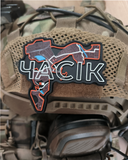
Military vehicles often contain details that will never appear in a factory catalogue: crew members' personal belongings, stickers, inscriptions, keepsakes and patches. In some vehicles, collections can be seen on the inside walls or ceiling of the cab or canopy: unit insignia, gifts from comrades, city symbols, commemorative patches and original designs.
This is not a formal military tradition, nor is it a feature of every vehicle. It is better understood as a personal way for a crew to preserve reminders of its own story. One patch may represent a unit, another a city, and a third the people with whom the crew shared a particular period of service.
Through these small collections, a vehicle gradually becomes more than a means of transport. It carries stories of the people who use it. That is why patches featuring city symbols, coats of arms and military themes fit naturally into this culture.
Raccoon Merch offers a collection of original PVC patches featuring Ukrainian cities, military themes and other designs. They are a way to carry symbols of places, people and communities that matter.
Explore the Raccoon Merch PVC patch collection.
Why pickups remain important to modern armed forces
A pickup is not a universal solution for every military task. It cannot replace an armoured vehicle where protection is required, an ambulance where specialised medical equipment is needed, or a heavy truck where large volumes of supplies must be transported.
But armed forces have a huge number of tasks between those extremes: moving people, delivering water, bringing batteries, collecting tools, transporting spare parts, helping repair teams, carrying communications equipment or supporting UAV crews. It is in this everyday work that a pickup proves its value.
The wartime story of the pickup is not only the story of "technicals" and dramatic photographs of machine guns mounted in cargo beds. It is also the story of a simple working vehicle that, thanks to its design and availability, has become part of the wider military support system. Often its most important mission goes unnoticed: simply delivering what someone urgently needs, on time.
This article is for informational purposes. The examples describe general transport and support roles for pickups and are not instructions for combat conversion or use. Vehicle specifications vary by generation, market, configuration and technical condition.
Electronic Intelligence (ELINT): How It Works and What It Can Reveal from the Radio Spectrum
Electronic Warfare (EW): How It Works, Its Capabilities and Limitations
Structure of Ukraine’s Armed Forces and Defence Forces: From Squad to Corps
History of the Armed Forces of Ukraine: From the Creation of an Independent Army to Today
From the Rod of Asclepius to the Combat Medic: The History of Military Medicine
Military Intelligence of Ukraine - History, Development and Modern Role
What to Give a Commander or Officer - Gift Ideas for a Military Service Member
What to Give a Military Medic: 17 Gift Ideas for Combat Medics, Paramedics and Tactical Medics
Military Patches: How a Small Patch Became a Symbol of Military Culture
What to Gift a Soldier: 15 Meaningful Gift Ideas They'll Truly Appreciate