Photographs from the wars in Chad, Libya, Somalia, Iraq and Syria repeatedly show familiar silhouettes: a white pickup with a machine gun mounted in its bed, a Land Cruiser carrying an anti-aircraft gun, or a convoy transporting fighters and ammunition. The Toyota Hilux and Land Cruiser have become so recognisable in these conflicts that their name became attached to an entire war: the Toyota War of 1986-1987.
The wartime story of these vehicles is not the story of purpose-built combat machines. It is the story of civilian vehicles that, thanks to their widespread availability, carrying capacity and off-road ability, found their way into armies, insurgent groups and mobile units. In some cases, their cargo beds became platforms for weapons normally mounted on much larger vehicles.
Land Cruiser: A Military Requirement That Became a Civilian Legend
The Land Cruiser story began in 1950, when Toyota received a request to develop four-wheel-drive vehicles for American forces and Japan's newly established National Police Reserve. The first Toyota BJ prototype was completed on 1 August 1951. It was a utilitarian vehicle built on a modified Model SB truck chassis, powered by a 3,389 cc Type B inline-six petrol engine producing approximately 85 hp.
In July 1951, Toyota test driver Ichiro Taira drove the BJ up to the sixth station of Mount Fuji - higher than any vehicle had reached before. But Toyota lost the main police and military tender: the customer selected the Mitsubishi Jeep, a licensed version of the American Willys. That did not end the project. Japan's National Police Agency later ordered 289 BJ vehicles for patrol duties, while forestry and power companies used them on mountain roads.
In June 1954, Toyota renamed the model Land Cruiser. Exports began in the same decade: the company shipped 98 Land Cruisers overseas in 1955, 518 in 1956 and 2,502 in 1957. The vehicle quickly found buyers in countries that needed simple four-wheel-drive transport for mountains, deserts and remote areas. Toyota documents these details in its history of Land Cruiser four-wheel-drive development.

The 70 Series, introduced in 1984, occupies a special place in this history. Unlike more comfort-oriented passenger SUVs, it was designed with durability and load-carrying work in mind. The family included several body styles: short- and long-wheelbase off-roaders, vans, troop carriers and pickups. It is the Land Cruiser 70 - not just the Hilux - that frequently appears in photographs from conflicts in Africa and the Middle East.
Hilux: From a One-Tonne Workhorse to a Global Pickup
The Toyota Hilux made its debut on 21 March 1968. The first generation was developed as a compact truck for everyday work. It featured a separate frame, independent front suspension with double wishbones, and a leaf-sprung solid rear axle. Its original engine was a 1.5-litre petrol unit producing 70 hp; payload capacity was 1,000 kg, and the load bed measured 1,850 mm in length.
A key step in the model's later military career came in 1979, when the Hilux gained a four-wheel-drive version. From then on, it could serve not only as an urban work truck but also as transport for poor roads and off-road terrain. In 1986, cumulative Hilux production reached four million vehicles. By the end of the 1980s, Toyota was selling the pickup in dozens of countries and reported exports to 140 countries in 1988.
The name Hilux combines the English words “high” and “luxury”. In military history, however, the model became known not for luxury but for practicality: its open cargo bed could carry awkwardly shaped loads, while four-wheel-drive versions could operate far beyond paved roads.
The Hilux and Land Cruiser are often confused in photographs. They are separate model lines, although at certain times they shared similar roles and overlapping body styles. Both were used in the Toyota War and other conflicts: the Hilux as a pickup, and the Land Cruiser in utility versions including the 40, 45 and 70 Series.
The Toyota War: Pickups Against Libyan Armoured Forces
The name Toyota War became attached to the final phase of the Chadian-Libyan conflict in 1986-1987. Libya sought to retain control of the Aouzou Strip in northern Chad and had a substantial advantage in heavy equipment: T-55 and T-62 tanks, armoured personnel carriers, artillery, combat helicopters and Soviet-made aircraft. Chadian forces could not match Libya tank for tank, so they relied on mobile units whose transport fleet included large numbers of four-wheel-drive Toyotas.
Pickups and off-road vehicles were fitted with heavy machine guns, anti-aircraft guns, recoilless rifles and French-made MILAN anti-tank guided missile systems. MILAN was particularly important: it was a guided missile designed to destroy armoured vehicles, not simply another machine gun mounted in a truck bed. Combined with the vehicles' mobility, it gave Chadian units a means of engaging Libyan tanks.
On 22 March 1987, Chadian forces attacked and captured the Libyan base at Wadi Doum. Mobile units advanced across the desert, approached the fortified site and exploited surprise. After the base fell, the Libyans abandoned large quantities of equipment and weapons. In September, Chadian forces raided Maaten al-Sarra, an airbase inside Libya itself.
The significance of the Toyota War is not that pickups supposedly defeated tanks by themselves. Mobility, knowledge of the terrain, small-unit tactics, anti-tank missiles, allied support and mistakes by the Libyan command all played a part. Toyota vehicles formed the transport backbone of these mobile groups. The military analysis “The Pickup Truck Era of Warfare” discusses the role of pickups in this campaign and the later spread of technicals.

Libya, 2011: When a Pickup Became a Rocket-Artillery Platform
During the 2011 uprising against Muammar Gaddafi, Libya became a workshop for improvised military vehicles. The country had large quantities of captured weapons, but not always enough serviceable military vehicles, repair infrastructure or centralised supply. Local workshops converted civilian pickups into platforms for machine guns, anti-aircraft guns and rocket systems.
Soviet-designed ZU-23-2 and ZPU anti-aircraft guns, recoilless rifles and S-5 aircraft rocket pods were mounted on cargo beds. These rocket pods were originally designed to be carried under the wings or fuselages of aircraft and helicopters. In Libyan workshops, they were adapted for ground use on vehicles. In some cases, pickups carried homemade multiple-launch rocket systems resembling scaled-down versions of the BM-21 Grad.
The Libyan example, described in the analysis cited above, shows the scale of these conversions: mechanics built hundreds of improvised vehicles fitted with large S-5 rocket pods and modified cargo beds to accommodate heavy weapons. These were not factory-built Toyota variants or standard military modifications made by the manufacturer. They were examples of civilian vehicles being used as readily available chassis for unconventional weapon systems.
Such vehicles had obvious limitations: recoil, weight, stability, accuracy and crew safety could not match the characteristics of purpose-built artillery platforms. Nevertheless, during a civil war they gave armed groups a way to move weapons quickly and deploy them where standard military vehicles were unavailable.

Somalia, Iraq and Syria: Technicals Become a Familiar Sight
In Somalia during the 1990s, armed pickups became part of the everyday landscape of war. After the collapse of central government, local clans and armed groups controlled territory, roads, ports and urban districts. A pickup carrying a machine gun or anti-aircraft weapon served as a mobile platform for security, patrols and displays of force. Somalia is often associated with the spread of the term “technical”. One explanation traces it to “technical assistance”: international organisations reportedly used this budget category to fund security for humanitarian operations. The term's origins are disputed, however, so this explanation should not be treated as definitively established.
In the following decades, armed pickups were used in Iraq, Afghanistan, Syria and countries across the Sahel. They were operated by government forces, local militias, insurgent movements and non-state armed groups. Toyota was highly visible, but it was not the only brand: Nissan, Mitsubishi, Isuzu, Ford and other pickups and light trucks were also converted into technicals.
In 2014-2015, the Hilux and Land Cruiser became especially recognisable through videos and photographs released by the Islamic State in Iraq and Syria. Convoys of white pickups carrying heavy weapons regularly appeared in the group's propaganda footage. These were not special factory-built military variants, but mass-produced civilian vehicles that had reached armed groups through local markets, resale and other supply channels.
Why Toyota? Not Magic, but Global Availability
The popularity of the Hilux and Land Cruiser has a much more practical explanation than the legends about “indestructible” engines. For decades, these vehicles have been sold across Africa, the Middle East, Asia and Australia. Farmers, construction companies, energy firms, geologists, humanitarian organisations, police and armed forces all used them. Spare parts, repair knowledge and networks of mechanics familiar with their construction spread alongside the vehicles.
Several specific features matter for military use:
- Cargo bed. A pickup can carry people, fuel cans, generators, communications equipment, tools and other gear that is difficult to fit into a passenger car.
- Body-on-frame construction. The design is intended for carrying loads and operating on rough roads. That does not mean the frame can safely support every type of additional structure or weapon.
- Four-wheel-drive versions. They can travel on dirt roads, sand and mud when vehicle weight, tyres and ground conditions allow.
- Widespread availability. In many countries, it is easier to find parts and a mechanic familiar with a Hilux or Land Cruiser than with a low-volume military vehicle.
In 2015, Toyota emphasised that many vehicles seen in militant videos were not new cars, but used vehicles or units that had been resold. This illustrates that conflict zones receive vehicles not only through direct manufacturer sales, but also through extensive second-hand markets.
Ukraine: Toyota in the Drone War
In the Russian-Ukrainian war, pickups have become one of the most visible types of light transport used by Ukraine's Defence Forces. They carry personnel, supplies, equipment, generators and communications gear, and support the work of mobile teams. The Toyota Hilux is one model in this fleet, alongside the Mitsubishi L200, Nissan Navara, Ford Ranger and other pickups.
This is no longer just volunteer-provided transport. In October 2024, Ukraine's Ministry of Defence reported that the Toyota Hilux was among the foreign vehicle models codified and approved for use by the Defence Forces. This means the model is formally included in the military supply system, not merely seen in volunteer donation photographs.
An even more telling example emerged on 26 May 2026. The Dutch Ministry of Defence announced the transfer of more than 60 Toyota Hilux pickups to Ukraine's Unmanned Systems Forces Command. The vehicles were shipped by rail; after their arrival, the Ukrainian side was to determine their configuration and install equipment according to unit requirements. The Dutch ministry specifically cited the transport of personnel and materials, as well as support for drone teams. It is a striking example: pickups are needed even by units whose main specialisation is unmanned systems.
Mobility means something different in drone warfare than it did in Chad in 1987. Back then, a pickup helped units cross the desert quickly and outflank enemy positions. In Ukraine, it can transport crews, antennas, batteries, control stations and other equipment to the required area. After completing a task, a team can relocate. But reconnaissance UAVs and FPV drones threaten any conspicuous vehicle, so an ordinary pickup is not safe transport when moving under enemy observation.
The Toyota does not become a “counter-drone vehicle” by itself. Its role is to provide mobility for the people and equipment used to detect, launch, control, support or intercept unmanned systems. The Dutch transfer of more than 60 Hilux pickups illustrates this shift: a vehicle with a conventional cargo bed is being integrated into a new form of warfare built around mobile drone teams and their equipment.
Patches on Board: A Vehicle as Part of the Crew's Story
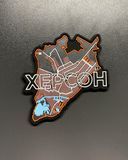
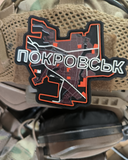
In many military vehicles, the cabin gradually becomes a personal space for the crew. Flags, unit insignia, commemorative badges and entire patch collections can be seen on ceilings, interior panels and sun visors. They represent units, cities, places of service, comrades and events the crew wants to remember.
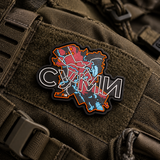
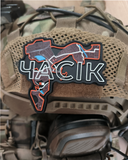
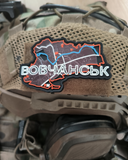
Such collections are not limited to military insignia. A patch bearing the name of a frontline city may recall where the crew served; an FPV design may reflect the unit's area of work; a tactical medicine patch may honour the people who save lives. The Raccoon Merch PVC patch collection includes designs in these themes: frontline cities, FPV and tactical medicine.
From the Toyota War to the Drone War
The Land Cruiser and Hilux have travelled a long way from utilitarian vehicles for police, farmers and remote-area services to becoming some of the most recognisable vehicles in modern conflicts. In Chad, they gave mobile units the mobility to confront heavier Libyan equipment. In Libya, pickups were converted into platforms for anti-aircraft guns and even aircraft rocket pods. In Iraq and Syria, the widespread presence of Toyotas made them instantly recognisable in footage released by armed groups.
In Ukraine, the Hilux and other pickups remain useful in a different kind of war - one shaped by reconnaissance and strike drones, mobile teams and unmanned systems. Their fundamental task has not changed: to transport people and equipment where they are needed. The environment in which they operate has changed. Their ability to adapt to new roles helps explain why an ordinary pickup remains an important part of military logistics.
Pickups at War: How a Versatile Vehicle Became Essential to Modern Armies
Electronic Intelligence (ELINT): How It Works and What It Can Reveal from the Radio Spectrum
Electronic Warfare (EW): How It Works, Its Capabilities and Limitations
Structure of Ukraine’s Armed Forces and Defence Forces: From Squad to Corps
Browning: The History of a Legendary American Firearms Manufacturer
What to Give a Commander or Officer - Gift Ideas for a Military Service Member
What to Give a Military Medic: 17 Gift Ideas for Combat Medics, Paramedics and Tactical Medics
What to Gift a Soldier: 15 Meaningful Gift Ideas They'll Truly Appreciate