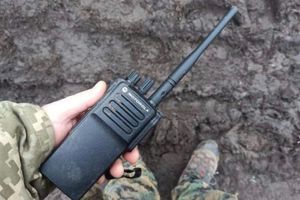
A radio has long been one of the most important tools of military communication.
On the modern battlefield, it can connect an infantryman with a commander, a crew with a command post, a weapons team with a drone operator, or different elements of a unit with one another.
In Ukraine, radios have become such a familiar part of military equipment that for many service members, learning to use one begins during basic training.
But having a modern radio does not automatically mean having reliable communications.
A unit may have digital radios, repeaters, headsets and encryption - and still create problems for its own network if operators talk for too long, interrupt others, confuse call signs or transmit critical information without verification.
This is why radio discipline matters.
It is not simply a collection of formal rules. It is a habit of transmitting information in a way that allows friendly forces to understand it quickly and correctly while giving the enemy as little useful information as possible.
And in modern warfare, there is one principle worth remembering at all times:
Use the radio as if the enemy may be listening.

What Is Radio Discipline?
Radio discipline is the set of rules and habits used to keep communications clear, brief and organized.
It includes not only what to say, but also:
-
when to transmit;
-
how to start a transmission;
-
how to structure a message;
-
how to transmit numbers;
-
how to confirm received information;
-
when it is appropriate to interrupt another transmission;
-
what information should never be transmitted openly;
-
how to handle the radio and batteries;
-
how to minimize unnecessary transmissions.
Ukrainian military training materials also emphasize minimizing transmission time and avoiding unnecessary conversations over the radio. Rules for Safe Use of Radio Communications - Sprotyv
Today, this is not simply a matter of convenience. Every radio transmission creates an electromagnetic signature that may potentially be detected or analyzed by electronic warfare and signals intelligence systems.
Listen Before You Transmit
One of the simplest and most important habits is not pressing the push-to-talk button immediately.
Before transmitting:
-
make sure you are on the correct channel;
-
listen to the network;
-
determine whether another important transmission is taking place;
-
formulate your message;
-
only then transmit.
If an operator presses the button first and starts thinking about what to say afterward, they occupy the channel unnecessarily and increase the risk of mistakes.
A good operator knows what they want to say before pressing the push-to-talk button.
Press the Button - Then Pause Briefly
A common beginner's mistake is:
press PTT → immediately start talking.
A better sequence is:
press → brief pause → speak.
This does not mean mechanically counting a fixed number of seconds. The required delay depends on the radio, operating mode and network.
The principle is simple: allow the transmitter and communication system enough time to enter transmission mode so that the first word is not lost.
This can be especially important when working through repeaters or digital communication systems.
Don't Keep Moving the Radio While Transmitting
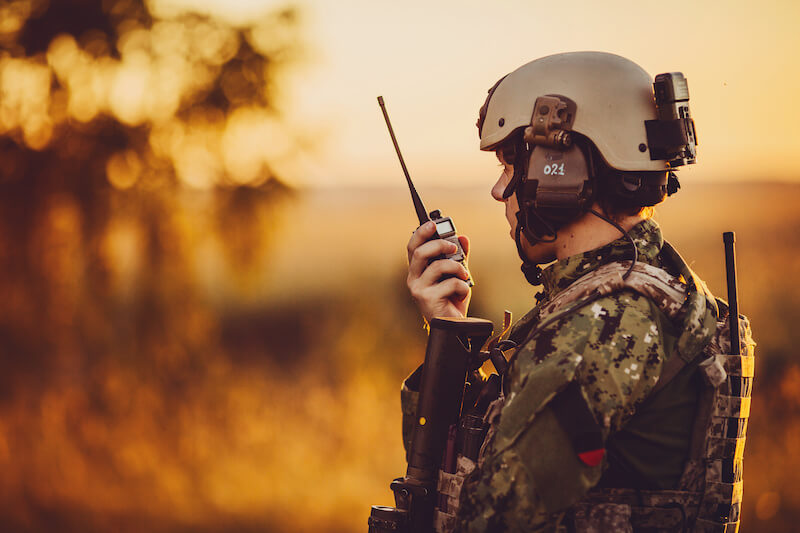
During transmission, avoid unnecessary movement of the radio.
Do not unnecessarily:
-
rotate the radio in your hand;
-
rapidly change the antenna position;
-
hide the radio behind your body;
-
press the antenna against metal equipment;
-
cover the antenna with clothing or gear.
The position of the antenna, the operator's body, equipment and surrounding obstacles can all affect radio performance.
If communication is already established, the best approach is usually to keep the radio in a stable position and transmit calmly.
Formulate the Message Before Pressing PTT
Radio communication is not a normal conversation.
Its purpose is to transmit information.
Compare:
"Well, basically, we're here now and everything seems okay, but something started happening over there..."
with:
"Situation changed. Additional information required."
The second message is shorter and more useful.
Before transmitting, think:
who → what happened → what is needed → what confirmation is required.
A few seconds of preparation can significantly improve the quality of communication.
"Are You Already at the Position?" - When Intonation Is Not Enough
In a normal conversation, intonation helps us understand meaning.
The sentence:
"Are you already at the position?"
clearly sounds like a question.
But with poor radio reception, noise or interference, intonation can be lost.
This is why a message can be structured explicitly:
"You - already - at - position - QUESTION."
The final word makes it unambiguous that the message is a question rather than a statement.
This illustrates a broader principle:
Do not rely on intonation when it may be lost. Make the meaning explicit with words.
"Reception", "Received", "Plus-Plus" and "Minus"
Ukrainian military radio practice includes a number of short standardized expressions.
"Reception"
The Ukrainian word "прийом" indicates that the speaker has finished their transmission and is now expecting a response.
For example:
"Report complete. Reception."
The other station now knows it is their turn to speak.
"Received"
The information has been received.
"Plus-Plus"
A positive confirmation used within communication systems where this wording has been established.
"Minus"
A negative response or another meaning defined by the particular network.
An important point is that the exact words and meanings can be defined by the procedures of a specific radio network or unit.
They should therefore not be treated as a universal military dictionary.
"Air" - When You Need to Interrupt
Normally, operators should avoid interrupting another transmission.
But sometimes waiting is not an option.
In Ukrainian military radio practice, the word "ефір" (efir, literally "air") can be used to signal the need for urgent access to the channel.
This is fundamentally different from simply wanting to add something to the conversation.
If information can wait - it waits.
If the situation is urgent - the established procedure for entering an ongoing transmission is used.
When Information Is Critical - "Prepare to Copy"
One of the most useful habits in radio communication is not beginning to dictate critical information without first making sure the recipient is ready.
This is particularly important for:
-
coordinates;
-
numbers;
-
times;
-
designations;
-
other critical data.
A safer sequence is:
"Prepare to copy."
The recipient:
"Ready."
Only then is the information transmitted.
Afterward:
"I repeat."
The information is transmitted again.
If necessary, the recipient can read back what they recorded for verification.
This creates a simple verification cycle:
transmit → record → repeat → verify.
The more important the information, the less room there should be for assumptions.
Phonetic Alphabets: How to Transmit Letters Clearly
When radio reception is poor, simply naming a letter may not be enough.
For example, letters that sound similar can easily be confused.
This is why phonetic alphabets are used - each letter is represented by a word that is easier to distinguish over a noisy radio channel.
In Ukraine, both the international phonetic alphabet and a Ukrainian phonetic alphabet may be encountered.
The International Phonetic Alphabet
The best-known version is the NATO phonetic alphabet:
| Letter | Word |
|---|---|
| A | ALFA |
| B | BRAVO |
| C | CHARLIE |
| D | DELTA |
| E | ECHO |
| F | FOXTROT |
| G | GOLF |
| H | HOTEL |
| I | INDIA |
| J | JULIETT |
| K | KILO |
| L | LIMA |
| M | MIKE |
| N | NOVEMBER |
| O | OSCAR |
| P | PAPA |
| Q | QUEBEC |
| R | ROMEO |
| S | SIERRA |
| T | TANGO |
| U | UNIFORM |
| V | VICTOR |
| W | WHISKEY |
| X | X-RAY |
| Y | YANKEE |
| Z | ZULU |
This is the alphabet most people recognize from terms such as "Alpha, Bravo, Charlie, Delta..."
The Ukrainian Phonetic Alphabet
Ukraine also has its own phonetic alphabet, listed in Ukrainian regulatory documentation.
| Letter | Word |
| А | АНДРІЙ |
| Б | БОГДАН |
| В | ВАСИЛЬ |
| Г | ГРИГОРІЙ |
| Ґ | ГУДЗИК |
| Д | ДМИТРО |
| Е | ЕНЕЙ |
| Є | ЄВГЕН |
| Ж | ЖУК |
| З | ЗЕНОВІЙ |
| И | ІГРЕК |
| І | ІВАН |
| Ї | ЇЖАК |
| Й | ЙОСИП |
| К | КІЛОВАТ |
| Л | ЛЕВКО |
| М | МАРІЯ |
| Н | НАТАЛКА |
| О | ОЛЬГА |
| П | ПАВЛО, ПЕТРО |
| Р | РОМАН |
| С | СТЕПАН |
| Т | ТАРАС |
| У | УКРАЇНА |
| Ф | ФЕДІР |
| Х | ХРИСТИНА |
| Ц | ЦЕНТР |
| Ч | ЧОЛОВІК |
| Ш | ШУРА |
| Щ | ЩУКА |
| Ю | ЮРІЙ |
| Я | ЯКІВ |
| Ь | ЗНАК (ІКС) |
The complete Ukrainian and international phonetic alphabets are provided in Appendix 27 of Ukraine's Amateur Radio Regulations. NKEK - Appendix 27 "Phonetic Alphabet"
Where Is This Useful?
A phonetic alphabet is not only useful for call signs.
It can help transmit:
-
letter designations;
-
names;
-
codes;
-
alphanumeric combinations;
-
other information where a single incorrectly heard letter could change the meaning.
This can be particularly important when working with systems that use coded coordinates and other alphanumeric designations, including tactical systems such as Kropyva, used by Ukrainian forces.
The goal is not to "encrypt" a letter.
The goal is to make sure the recipient hears exactly the letter that the sender intended.

How to Encode Numbers
Numbers create another problem in radio communication.
For example, 15, 50, 17 and 70 can easily be confused when reception is poor.
One principle that can be used in an agreed coding system is to replace numbers with words.
For example, an established system might use:
-
a particular name for one digit;
-
a particular city for another;
-
a particular color for another.
Instead of transmitting the number directly, the operator uses a word whose meaning is already known to the participants in the network.
For example, purely hypothetically:
"Maria" = 4
"Lviv" = 7
"green" = 2
These are only examples of the principle, not an actual operational code table.
The advantage is that clearly distinguishable words can sometimes be easier to recognize in a noisy radio environment than short numbers.
But there is an essential point:
A code word only works as long as its meaning remains unknown to unauthorized listeners.
That is why active coding tables and procedures need to be controlled and periodically updated according to the procedures of the specific unit.
Redundancy: When Two Elements Are Better Than One
A well-designed coding system can deliberately introduce redundancy.
For example, hypothetically:
"Lviv 83" = movement begins.
The command contains two independent elements.
If poor reception causes only "Lviv" or only "83" to get through, a recipient who knows the system may still understand that the message refers to the beginning of movement.
This illustrates an important principle:
Critical information should be structured so that partial loss of a transmission does not necessarily destroy its meaning.
Of course, actual operational codes and tables should not be universal or publicly available.
Familiar Military Terms Are Not Reliable Encryption
Military environments naturally develop shortened expressions and conventional terms.
Examples that may be encountered include:
-
4-5-0;
-
"small" - minutes;
-
"large" - hours;
-
"box" - a vehicle, truck or armored vehicle;
-
"pencils" and other widely known expressions.
Such terms may be convenient in everyday communication.
But there is an important difference between a conventional designation and actual information protection.
If the meaning of a word is already widely known, it does not conceal information from someone listening to the channel.
This is especially true of expressions that have been repeatedly discussed in open sources, social media and military-related publications.
So it should not be assumed that:
"We said 'box' instead of 'vehicle', so the enemy won't understand."
If the meaning is already known, it is not reliable information protection.
Coordinates Should Not Be Transmitted in Plain Text
Coordinates are among the most sensitive types of information that may be transmitted over a radio network.
They should therefore not simply be read aloud as an ordinary sequence of digits over an unprotected channel.
Units may use established procedures for encoding and transmitting such information.
These may include:
-
coded words;
-
numerical codes;
-
specific transmission formats;
-
phonetic alphabets;
-
read-back and repetition;
-
other procedures defined by the particular network.
In some systems, information may also be transmitted in a predetermined reverse order for additional verification or to make immediate recognition more difficult.
But the principle remains the same:
Do not improvise a method for transmitting critical data. Use the current procedure established by your network.
Radio Deception: When the Enemy Is Listening but Hears the Wrong Story
There is another interesting aspect of radio communication - radio deception, sometimes referred to as a "radio game."
This is a situation in which the enemy is known or expected to be monitoring communications, and a deliberately false picture of events is created for them.
A hypothetical example:
A soldier transmits:
"Moving to position A."
But in reality, they are already at position B.
The transmission creates a particular picture for anyone listening from outside.
The commander and the participants, however, know the actual meaning of the messages in advance.
To the outside listener, it sounds like an ordinary working radio exchange.
To the participants, it is part of a prepared scenario.
It is important to understand that radio deception is not simply random lying over the radio.
It requires:
-
a clear plan;
-
coordinated roles;
-
a shared understanding of the real and apparent meaning of messages;
-
discipline from everyone involved.
If one participant starts improvising, the result may confuse friendly forces rather than the enemy.
The Modern Battlefield: Electronic Warfare Changes the Rules
In the past, radio discipline was often understood mainly as preventing the enemy from learning the content of a conversation.
Today, that is not enough.
An adversary may be interested not only in what is being said, but also in the fact that a radio transmission is taking place.
Modern electronic warfare and signals intelligence systems can detect and analyze electromagnetic emissions.
Military communications equipment can therefore become one of many sources of information about a unit's activity.
U.S. Army publications have highlighted the importance of reducing electromagnetic signatures and managing communications in order to improve survivability on the modern battlefield. U.S. Army - Tactical Communication Survivability in the Hyper-Lethal Battlespace
This gives an old principle a new meaning:
The less unnecessary information you transmit, the less unnecessary information you expose.
Encryption Helps - But It Does Not Make the Radio Invisible
Modern digital radios can use strong cryptographic protection.
For example, Motorola Solutions lists AES-256 encryption among the security capabilities available for MOTOTRBO DP4800/DP4801 radios. Motorola Solutions - MOTOTRBO DP4800 / DP4801
That provides a serious level of protection for the content of transmissions.
But two different things must be separated.
Encryption protects the content.
It does not make the transmission itself invisible.
Strong encryption can make it significantly harder to intercept the content of a transmission, but it does not make the radio signal itself magically invisible to the enemy.
This is one of the most important concepts for a radio operator to understand.
Even if the enemy cannot simply listen to the contents of an encrypted transmission, the transmission itself can remain part of the electromagnetic picture.
That is why modern military communications place significant emphasis on managing electromagnetic emissions rather than relying on encryption alone. U.S. Army - Cold War Era TTPs for Reducing EM Signature
Radios Must Be Protected and Their Security Updated
A modern radio is more than a piece of electronics.
Digital systems may contain network settings, access parameters and cryptographic keys.
Losing a radio can therefore create a problem that goes far beyond losing the physical device.
If equipment is lost or suspected of being compromised, the unit should follow its established compromise procedures.
Depending on the system, this may involve updating configurations, changing relevant cryptographic keys or taking other measures across the network.
This is why regularly updating configurations and cryptographic keys is part of radio security, not unnecessary bureaucracy.
The exact frequency and procedure should always be determined by the established security procedures of the unit rather than by a generic rule found online.
A Good Report Is Short and Structured
The exact format of a report is determined by the SOP of the specific unit.
But the general principle is simple:
who → what happened → what is needed → confirmation.
Do not try to tell the entire story of an event in a single transmission.
Break information into short, clear messages when appropriate.
This:
-
reduces network load;
-
makes information easier to understand;
-
reduces mistakes;
-
shortens transmission time.
Words That Should Not Be Added Without a Reason
Radio communication often becomes filled with words that carry little or no useful information:
-
"here";
-
"going";
-
"flying";
-
"now";
-
"well";
-
"basically";
-
"you know";
-
"look".
The words themselves are not always a problem.
The problem begins when they replace specific information.
Instead of:
"I'm here, moving now."
transmit the actual information required by the established reporting format.
Radio communication should not sound like an ordinary conversation.
Common Mistakes Made by Beginners
Starting to talk immediately after pressing PTT
The first word may be lost.
Not listening to the channel
This can result in interrupting another transmission.
Speaking too quickly
Especially under stress.
Speaking for too long
This occupies the channel with information that may not be relevant to everyone.
Transmitting important numbers without verification
One incorrectly heard digit can completely change the meaning.
Using familiar expressions as "secret codes"
If the meaning is already widely known, it is not reliable information protection.
Assuming encryption solves everything
It does not.
Encryption protects the content, but it does not eliminate the need for radio discipline.
Forgetting backup power
A discharged radio turns every other technological advantage into useless weight.
Practical Checklist Before Going on Duty
Before starting an assignment, check:
-
the radio is functioning properly;
-
the primary battery is charged;
-
a spare battery is available;
-
the antenna is in good condition;
-
the headset and PTT work;
-
required channels are known;
-
call signs are known;
-
the rules of the radio network are understood;
-
current coding procedures are known;
-
current configurations and cryptographic keys are being used according to established procedures;
-
the operator knows what information must not be transmitted openly.
Before every important transmission, it is also worth taking a short moment to ask:
What exactly am I going to say?
Who needs this information?
Does it need to be transmitted over the radio at all?
Will the recipient understand it the first time?
Does it require confirmation?
Then:
listen → formulate → press → brief pause → transmit → receive confirmation.
The Most Important Rule of Radio Discipline
A good operator is not someone who talks a lot.
Nor is it necessarily the person who knows every technical feature of their radio.
A good operator is someone who can transmit the necessary information clearly, briefly, unambiguously and at the right time.
In modern warfare, there is another essential skill: understanding that every transmission creates an electromagnetic signature.
The best approach is therefore simple:
Speak briefly. Speak clearly. Do not transmit unnecessary information. Verify what matters. Use current coding procedures. And always remember that the enemy may be listening.
A radio is only a tool.
Its real effectiveness depends on how well the person using it understands the tool - and how disciplined they are when using it.
The History of Military Radio Communication: From Field Telephones to Modern Radios
Night Vision Devices: History, Evolution and Night Vision Technology
The Evolution of FPV on the Frontline: How a Civilian Hobby Reshaped Modern Warfare
What to Give a Military Medic: 17 Gift Ideas for Combat Medics, Paramedics and Tactical Medics
What to Gift a Soldier: 15 Meaningful Gift Ideas They'll Truly Appreciate