Ukraine’s Defence Forces are a multi-layered system of command, combat units, intelligence, artillery, air defence, aviation, naval forces, unmanned systems, medicine, communications, maintenance and supply. Today, the system combines traditional military structures with specialised units and reforms that are changing how forces are commanded.
To understand it, it helps to distinguish three things: an organisational echelon (squad, platoon, company, battalion, brigade, corps); a unit’s role (mechanised, artillery, reconnaissance, maintenance); and a command level (command, operational grouping, corps or brigade). Units of a similar size can have very different structures.

Important note. There is no single, permanent template for every military unit. Personnel numbers, internal organisation and unit designations depend on the mission, branch, authorised establishment and wartime changes. The examples below explain general principles and publicly reported structures; they are not exact tables of organisation for individual combat units.
1. Ukraine’s Defence Forces and the Armed Forces: What Is Included?
The term Defence Forces is broader than the Armed Forces of Ukraine (AFU). It includes the AFU and other military formations and state bodies that participate in national defence under Ukrainian law. The AFU has the General Staff, commands of branches and services, military units, educational institutions and other organisations.
The main branches of the AFU are the Ground Forces, Air Force and Navy. Other important components include the Air Assault Forces, Special Operations Forces, Territorial Defence Forces, Unmanned Systems Forces, Logistics Forces, Support Forces, Medical Forces, and Signal and Cyber Security Troops. The official overview is available on the AFU structure page. A unit’s permanent organisational affiliation is not the same as its temporary operational subordination.
2. Squad, Platoon, Company, Battalion, Regiment and Brigade
Squad → Platoon → Company → Battalion → Regiment or Brigade → Corps → higher operational command
Squad and platoon
An infantry squad often has roughly 6–12 personnel. It may operate machine guns, grenade launchers, observation equipment and other weapons. A platoon often combines two to four squads or specialised crews and may number around 20–50 people. An engineer, signals, mortar or drone platoon will have a different composition.
Company and battalion
A company usually includes three or four platoons, along with command and support elements. An infantry company might have roughly 80–150 personnel. In common organisational models, a tank company may have around 10–13 tanks, but this does not mean every combat unit has that number available in practice.
A battalion is a tactical formation with several companies and command, communications, medical and supply elements. A mechanised battalion often has three or four combat companies and may range from about 300 to 800 personnel. Artillery, unmanned systems, maintenance and medical battalions have different internal structures.
Regiment and brigade
A regiment may specialise in artillery, unmanned systems, communications, aviation or another field. The title alone does not always mean that a regiment is smaller than a brigade: its role, history and specific establishment matter.
A brigade combines several battalions with combat-support and sustainment units. For many brigades, a broad reference point is several thousand personnel, perhaps around 3,000–6,000, although actual strength can be lower or higher. A mechanised brigade may include three or four mechanised battalions, an armoured component, artillery, reconnaissance, air defence, engineers, signals, maintenance, medical and logistics units. The exact structure varies between Ukrainian brigades.
3. OSUV and OTUV: The Earlier Operational Command Model
OTUV stands for an operational-tactical grouping of troops. It coordinated forces in a particular area or along a specific axis. Brigades and separate units belonging permanently to different commands could be temporarily assigned to it.
OSUV stands for an operational-strategic grouping of troops, a higher command level that coordinated several OTUV groupings and larger forces across a broader direction.
Higher military command → OSUV → OTUV → brigades, regiments, separate battalions and attached units
The model offered flexibility: forces from different commands could be assembled to meet a particular operational situation. Its weakness could be unstable relationships between headquarters and units. Brigades that fought together for a long time might remain administratively dispersed, while an operational headquarters did not always have a permanent set of troops and a full range of its own support units.
4. The Corps Reform: What Changed?
In 2025, Ukraine began transitioning to a corps-based command system. According to the Ministry of Defence, the new structure includes 18 corps: 13 in the Ground Forces, two in the Air Assault Forces, two in the National Guard and one Marine Corps. In February 2026, the General Staff reported that the corps had acquired defined capabilities, while the transfer of brigades directly under corps headquarters, expansion of corps-level support and growth of unmanned systems units continued. More than 36,000 service members were moved during the formation of command bodies and corps-level units. Further details were published in the General Staff’s update on the corps reform.
Comparing the models
Earlier model: brigades with different permanent affiliations → temporary operational subordination to an OTUV → coordination by an OSUV.
Corps model: corps headquarters + assigned brigades + artillery, reconnaissance, unmanned systems, engineering, signals, air defence and logistics units → a higher operational grouping coordinates several corps when required.
A corps sits between a brigade and higher operational command. It is expected to plan operations, coordinate several brigades, manage reserves and synchronise artillery, reconnaissance, air defence, engineering, communications and logistics. It is not merely another headquarters: the corps level is intended to have its own support package and more stable relationships with subordinate brigades.
Corps in the publicly reported structure
Public lists identify the 3rd, 9th, 10th, 11th, 12th, 14th, 15th, 16th, 17th, 18th, 19th, 20th and 21st Army Corps of the Ground Forces; the 7th Rapid Response Corps and 8th Air Assault Corps; the National Guard’s 1st Azov Corps and 2nd Khartia Corps; and the 30th Marine Corps. Together, these make up 18 corps.
A common planning reference is around five manoeuvre brigades per corps, but the number varies and affiliations can change during reorganisation. A corps support package may include an artillery brigade, unmanned systems regiments or battalions, reconnaissance, engineering, signals, electronic warfare, logistics, medical and maintenance units. In 2026, official communications reported the completion of artillery-brigade formation within corps and the reorganisation of some separate unmanned systems battalions into regiments.
The 30th Marine Corps includes marine and coastal-defence brigades, as well as reconnaissance, anti-tank, air-defence and unmanned units. Public Navy listings have included the 34th, 35th, 36th, 37th, 38th, 39th and 40th Marine or Coastal Defence Brigades; the 140th Separate Reconnaissance Battalion; the 18th Separate Anti-Tank Battalion; separate marine battalions; and the 101st Anti-Aircraft Missile Division.
Within the National Guard, the 1st Azov Corps was formed around the 12th Azov Brigade, while the 2nd Khartia Corps was formed around the 13th Khartia Brigade. In the Air Assault Forces, the corps level brings together several air assault and airborne brigades with artillery, reconnaissance, air defence and support. Corps composition should always be read with a date in mind: temporary operational subordination and permanent assignment are not identical.
Publicly reported corps composition as of spring 2026
The following is an open-source analytical reconstruction of brigade-level affiliations, updated on 20 April 2026. It is not an official General Staff table of organisation. Some affiliations may have changed, and operational subordination does not always mean permanent assignment.
3rd Army Corps: 3rd Assault Brigade; 53rd, 60th and 63rd Mechanised Brigades; 125th Heavy Mechanised Brigade; 52nd Artillery Brigade.
9th Army Corps: public reporting has linked several mechanised brigades and artillery and support elements to this corps; assignments should be checked against current official reporting.
Other Ground Forces corps: the 10th, 11th, 12th, 14th, 15th, 16th, 17th, 18th, 19th, 20th and 21st Army Corps are part of the announced structure. Their brigade affiliations and support units may change as the reform progresses.
Air Assault Forces: the 7th Rapid Response Corps and 8th Air Assault Corps coordinate air assault and airborne brigades with supporting artillery, reconnaissance, air defence and logistics units.
National Guard: the 1st Azov Corps and 2nd Khartia Corps provide corps-level command for brigades and supporting units of the National Guard.
Marine Corps: the 30th Marine Corps brings together marine and coastal-defence formations and their supporting elements.
Public reporting does not provide a single, permanently current and complete order of battle for every corps. For that reason, this overview avoids presenting uncertain affiliations as definitive. Consult dated official announcements when checking a particular unit.
5. Ground Forces: Mechanised, Tank and Specialised Brigades
Mechanised brigade
A mechanised brigade combines infantry, armoured vehicles, artillery, reconnaissance, air defence, engineers, communications, medical support, maintenance and logistics. Its combat battalions may use infantry fighting vehicles, armoured personnel carriers or other transport, depending on availability and the unit’s equipment. The brigade’s strength comes from combining manoeuvre with fire support and sustainment, rather than from any single vehicle type.
Tank brigade
A tank brigade centres on armoured manoeuvre. It requires tank battalions, repair and recovery teams, ammunition and fuel supply, reconnaissance, infantry protection, air defence, engineers and communications. Tanks are most effective when integrated with infantry, artillery, drones, engineering and logistics; a tank unit cannot operate as an isolated collection of vehicles for long.
Mountain-assault and assault formations
Mountain-assault formations are trained and equipped for difficult terrain, including steep slopes, narrow approaches and conditions that complicate the movement of vehicles and supplies. Assault formations are organised for demanding offensive tasks, but their exact structure and equipment vary. A unit’s name is not a complete description of its current mission or capabilities.
6. Missile Forces and Artillery: Different Units for Different Missions
Artillery is not simply a group of guns. It includes weapon crews, target acquisition, reconnaissance, fire-direction elements, communications, ammunition supply, maintenance and command. The structure depends on the system, range, mission and echelon at which it is employed.
Batteries and battalions: how many systems?
An artillery battery commonly operates several guns or launchers. A broad reference point for many systems is four to six pieces, although smaller batteries of two or three systems can exist, and other establishments are possible. An artillery battalion (often called a division in Ukrainian artillery terminology) may combine several batteries. Actual numbers depend on the weapon, authorised establishment, losses, maintenance and operational requirements.
It is therefore misleading to assume that every battery has the same number of systems or that the nominal establishment always reflects the number available for a mission. Self-propelled howitzers, towed guns, mortars, rocket artillery and coastal missile systems each have different support requirements.
Why mortars are often at battalion level while heavier artillery is higher
Mortars can provide relatively responsive fire support close to manoeuvre units, so mortar elements are often included in battalions or brigades. Heavier tube artillery and multiple-launch rocket systems may be organised in dedicated artillery units at brigade, corps or higher levels. This makes it possible to coordinate larger volumes of fire and concentrate specialised systems where they are needed.
Rocket artillery
Multiple-launch rocket systems can deliver a concentrated salvo or engage targets over a wider area, depending on the ammunition and system. Their structure requires launcher crews, ammunition transport, technical maintenance, reconnaissance and targeting, communications, and command-and-control elements. Rocket artillery should not be confused with tactical missile units, which have different missions and systems.
Missile and coastal missile brigades
Missile formations use specialised command, launch, reconnaissance, communications and technical-support elements. Coastal missile units are designed to help defend maritime approaches and threaten hostile vessels within the capabilities of their systems. Publicly reported examples include Ukraine’s 360th Separate Coastal Missile Brigade. The precise current composition and deployment of such units should not be inferred from a general explainer.
Artillery reconnaissance
Artillery reconnaissance identifies and locates targets, observes impacts and helps assess changes on the battlefield. It may use radar, optical observation, acoustic or other sensors, unmanned aircraft and data-analysis tools. The 15th Separate Artillery Reconnaissance Brigade is a publicly known example of a formation focused on this function. Reconnaissance units and gun units work closely together but have different specialisations.
Anti-tank units
Anti-tank elements may operate guided missiles, recoilless weapons, specialised guns or other systems intended to defeat armoured vehicles. They can be organised as platoons, companies, battalions or separate units, depending on the equipment and role. Their effectiveness depends on reconnaissance, concealment, communications, mobility and coordination with infantry and other fires.
7. Air Defence: Layers and Types of Units
Air defence is a layered system rather than a single type of missile. Different units protect cities, infrastructure, airfields, command posts and troops, and each has its own range, sensors and engagement capabilities.
Air Force air defence
Air Force units operate systems intended to protect airspace and important areas against aircraft, cruise missiles and some other aerial threats. Their organisation includes command and control, radar and sensor networks, missile units, communications, technical support and logistics. Different systems cover different altitude and range bands, so coordination between them is essential.
Ground Forces air defence
Ground Forces air defence protects troops and manoeuvre formations against aerial threats near the battlefield. Depending on the unit, it may use short-range missile systems, guns, portable air-defence systems, electronic warfare and other counter-drone measures. Brigade-level air defence is intended to move and operate with ground formations, while higher-level systems can protect wider areas or provide additional capabilities.
8. The Air Force and Army Aviation
The Air Force includes aviation, air defence, radar, communications and support components. Aviation units may operate fighter, strike, transport or other aircraft, each requiring its own crews, maintenance specialists, airfield services, planning and logistics. Aircraft availability depends not only on the number of airframes but also on trained personnel, spare parts, weapons, maintenance and suitable infrastructure.
Army aviation supports ground forces, including through transport and other missions assigned to helicopters. Aviation formations are organised around squadrons and supporting units rather than the company-battalion pattern used by many ground formations. The precise size of a squadron and its available aircraft can vary by type and operational circumstances.
9. The Navy: Fleet, Marines and Coastal Defence
The Ukrainian Navy includes naval command, surface and other maritime capabilities, naval aviation elements where assigned, coastal defence and support. The practical structure has evolved during the full-scale war, when access to the sea, dispersed operations, unmanned platforms and shore-based systems have all affected how maritime missions are carried out.
The Marine Corps is a separate formation within the broader naval system, with marine and coastal-defence brigades and supporting units. Its structure can include reconnaissance, artillery, anti-tank, air-defence, unmanned systems, engineers, communications, medical and logistics elements. The 30th Marine Corps is the corps-level command announced as part of the wider reform.
Naval formations require specialist technical support, maintenance, communications, supply and personnel training. A ship, a shore-based missile unit and a marine brigade have very different organisational needs even when they contribute to the same overall defence mission.
10. Air Assault Forces
The Air Assault Forces are a separate branch of the AFU. They include air assault and airborne brigades and their supporting artillery, reconnaissance, air defence, engineering, communications, medical and logistics units. The term “air assault” does not mean that every operation involves a parachute landing: formations may be employed in a range of ground combat missions.
The corps-level structure is intended to coordinate several brigades and their support elements. As with other branches, actual composition and subordination may change, so dated official information is more reliable than an undated list copied from earlier reporting.
11. Unmanned Systems Forces
The Unmanned Systems Forces are a specialised component of Ukraine’s military system. Their remit extends beyond FPV drones to reconnaissance and strike unmanned aircraft, systems with different ranges, unmanned ground vehicles and maritime unmanned platforms.
At the lowest level, crews and teams operate particular systems. Above them may be squads, platoons, companies, battalions, regiments or brigades, depending on the technology and mission. A long-range reconnaissance unit, an FPV crew, a ground-robot team and a maritime drone unit have different training, communications, technical-support and planning requirements.
A drone operator is only one part of the team. Units also need maintenance and repair specialists, software expertise, communications, data analysis, mission planning, logistics and instructors. Unmanned systems show how modern military organisation depends on combining combat skills with technical expertise.
12. Special Operations Forces
The Special Operations Forces are a separate branch of the AFU. They should not be equated with ordinary infantry, all reconnaissance units or every formation whose name includes the word “special”. They are designed for missions that require distinct selection, training, planning, coordination and support.
Public materials refer to special operations centres, separate units and specialised formations, but not every internal echelon or chain of command is public. The key organisational principle is that specialised missions require highly trained personnel, intelligence, secure communications, medical and technical support, and careful operational planning.
A special-purpose regiment, maritime centre, training centre and signals regiment have different functions, so their names cannot be placed on a single scale of unit size. Special operations teams are generally smaller than the infantry elements of a conventional brigade, but they require substantial planning, intelligence, transport, communications, medical and technical support. Full establishments and exact team numbers are not published as a standard reference table.
13. The Defence Intelligence of Ukraine and Military Intelligence
The Defence Intelligence of Ukraine (DIU), part of the Ministry of Defence, includes command bodies, functional departments and units that support strategic and military intelligence, analysis, technical intelligence, cyber operations, special activities and combat missions. Public reporting has referred to the Active Actions Department, the 9th Department, specialised combat units and formations associated with long-range operations and maritime unmanned platforms.
A department is a functional management body; a military unit is a formation with its own command, personnel and subordinate elements. A department’s name therefore does not automatically mean that it is equivalent to a battalion or brigade. Public reporting has described the Active Actions Department as a combat component of military intelligence and linked the 9th Department with long-range operations. The full internal establishment and all command relationships are not public reference information.
Intelligence also exists within the AFU itself: brigades may have reconnaissance companies, while higher formations can include battalions, regiments and specialised centres. Their purpose is to provide commanders with information about the adversary, terrain and changing conditions. Artillery reconnaissance, electronic intelligence and drone-based aerial reconnaissance can cooperate, but they are distinct specialisations.
14. The Security Service of Ukraine and the Alpha Special Operations Centre
The Security Service of Ukraine (SBU) has a central apparatus, regional bodies, specialised centres, training institutions and support organisations. It is a state security and law-enforcement body with counterintelligence functions, not a branch of the Armed Forces. Regional offices work across territories, while specialised centres carry out functions at the national level.
The SBU’s Special Operations Centre “A” (commonly known as Alpha) is a specialised unit tasked with counter-terrorism and other exceptionally dangerous threats. During the full-scale war, its personnel have also taken part in combat missions. The centre has its own selection and training processes, operational planning, tactical teams and specialised support. Teams assembled for a mission require command, communications, intelligence, medical support, transport and technical specialists. The internal list of directorates and exact personnel numbers is not published in the same format as an army brigade’s establishment.
15. The National Guard and the State Border Guard Service
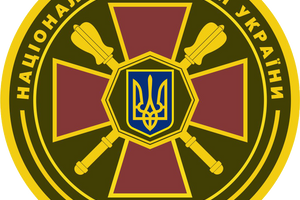
The National Guard of Ukraine has a military organisation that includes operational brigades, regiments, battalions, training units and support formations. Units differ by specialisation: mechanised, assault, artillery, unmanned systems, reconnaissance and special-purpose formations. The Azov and Khartia corps add a command echelon for coordinating several brigades and corps-level units.
A National Guard unmanned battalion within a brigade might include a headquarters, technical reconnaissance, FPV strike teams, aerial reconnaissance, counter-drone and electronic-warfare elements, heavy-bomber teams, unmanned ground vehicles, maintenance and support. This is one example of how an unmanned component can be integrated into a combined-arms formation; actual organisation varies.
The State Border Guard Service has border detachments, mobile border units, maritime guard, aviation and specialised elements. During the war, some of its units have carried out frontline combat tasks, including artillery, reconnaissance and unmanned-system missions. A border detachment should not automatically be equated with an army brigade: its structure depends on whether its mission is border, maritime or combat-focused.
16. Engineers, Electronic Warfare, Communications and Cyber Defence
Engineer units prepare positions, build crossings, breach mine obstacles, camouflage facilities and help maintain troop mobility. At brigade level, this may mean an engineer-sapper company or battalion; higher levels may have separate engineer units, bridging formations, demining teams and fortification specialists.
Electronic warfare (EW) affects an adversary’s radio links, navigation and electronic systems, while also helping protect friendly systems from some forms of interference. EW may be represented by companies within brigades, battalions, regiments or specialised higher-level units. Disrupting drone-control links, protecting friendly communications and conducting electronic reconnaissance require different equipment and training.
Signal and cyber-security units provide protected command links, telecommunications networks, communications nodes, automated command systems and information-system protection. Large headquarters have command posts and signal nodes; brigades may have signal battalions or companies, while battalions may have platoons and teams. Some units specialise in cyber defence, network security and incident response. Military courier and postal units deliver official correspondence and documents.
17. Medical Forces: The Casualty Pathway and Medical Facilities
Military medical support operates across several levels: combat medics, evacuation crews, stabilisation points, brigade medical points and companies, mobile hospital units, military clinical centres, specialist hospitals and rehabilitation services.
A typical pathway:
point of injury → combat medic → evacuation team or ambulance → stabilisation point → brigade medical point or medical company → hospital or military clinical centre → specialist treatment and rehabilitation
The route depends on the severity of the injury, distance and evacuation access. The closest medical team controls immediately life-threatening problems and prepares evacuation; a stabilisation point provides urgent interventions; the casualty is then moved to a facility with the required capabilities.
The medical system also includes mobile hospitals, military hospitals, intensive-care wards, operating theatres, laboratories, blood services, medical warehouses, supply and equipment maintenance, training and research institutions, and rehabilitation centres. It is a network for evacuation, treatment and recovery, not only medics at the frontline.

18. Logistics, Maintenance and Supply
Logistics provides ammunition, fuel, food, water, clothing, protective equipment, spare parts and other supplies. At tactical level, this may involve supply platoons, transport units and company- or battalion-level supply elements. At brigade level, there may be material-support companies, warehouses and transport; higher echelons include logistics brigades, bases, arsenals, depots and supply centres.
Repair and recovery units diagnose damage, repair vehicles, recover damaged equipment and return it to service. A brigade may have repair companies and recovery teams, while complex repairs are handled by specialised units and industrial facilities. Armoured vehicles, artillery, aircraft, radars and drones require different technical skills, tools and spare-parts inventories.
19. Training, Recruitment and Regeneration
For a unit to become combat-ready, personnel must be selected and trained, and squads, platoons, companies and battalions must practise together. The system requires instructors, training areas, simulators, equipment and ammunition. It includes training centres, specialist schools, recruitment centres, sergeant courses and military educational institutions.
After combat missions, units may need personnel replacements, equipment repairs, medical recovery, lessons-learned analysis and renewed collective training. Training and regeneration are continuous processes that help maintain the combat effectiveness of brigades and corps.
20. Insignia, Symbols and Military Culture
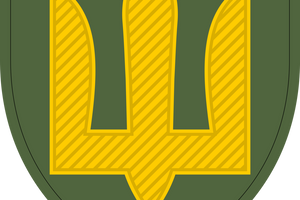
Brigades, regiments, battalions and centres may have their own names, honorary titles, colours, emblems and traditions. Symbols help identify a unit, preserve the memory of its history and strengthen a sense of belonging. During reorganisation, a unit may move under a new corps or receive a different status while retaining its name and insignia.
The Ukrainian military uses official rank insignia, unit emblems, sleeve patches, commemorative patches and informal unit symbols. A more consistent visual style within a branch or corps can improve recognition without necessarily replacing the historical emblems of individual units.
Conclusion
The structure of Ukraine’s Defence Forces is a system in which each echelon has its own role. Squads and platoons operate at the tactical level; companies and battalions organise larger elements; brigades combine manoeuvre, firepower and sustainment; corps coordinate several brigades and their own support package. OSUV and OTUV groupings provided operational command across different directions, while the corps reform is intended to establish more stable relationships between headquarters, brigades and specialised units.
Some of the most distinctive structures can be found in artillery reconnaissance, rocket and coastal missile units, different layers of air defence, the Marine Corps, special operations, unmanned systems, casualty evacuation, maintenance and logistics. These elements turn a collection of military units into a system capable of planning operations, supporting its forces and restoring combat effectiveness.
The story of Ukrainian cities, their histories and symbols of resistance continues in the Raccoon Merch “Cities” collection of T-shirts, hoodies and patches inspired by Ukrainian cities.
This article explains general organisational principles. Structures and command relationships can change; for specific formations, consult current official announcements.
History of the Armed Forces of Ukraine: From the Creation of an Independent Army to Today
National Guard of Ukraine: History, Combat Record and Modernization
Ukrainian Marines: History, Combat Path and the Modern Marine Corps
Ukrainian Special Operations Forces (SSO): History, Structure, Training, and Combat Missions
ArmaLite and the AR Family: From the AR-10 and AR-15 to the M16, M4 and Ukrainian UAR-15
Military Intelligence of Ukraine - History, Development and Modern Role
The Evolution of FPV on the Frontline: How a Civilian Hobby Reshaped Modern Warfare
What to Give a Military Medic: 17 Gift Ideas for Combat Medics, Paramedics and Tactical Medics
What to Give a Commander or Officer - Gift Ideas for a Military Service Member
What to Gift a Soldier: 15 Meaningful Gift Ideas They'll Truly Appreciate