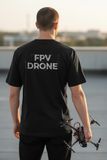
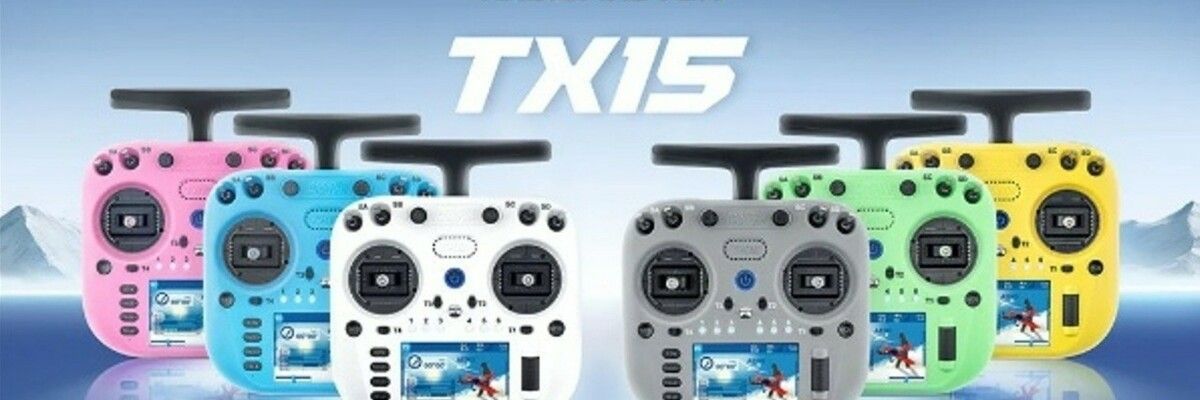
For someone who has never flown a drone, a radio transmitter may look fairly simple: two sticks, several switches, a screen, and an antenna.
For an FPV pilot, it is something completely different.
The transmitter is essentially an extension of the pilot's hands. Through it, the pilot feels the aircraft, develops precise motor skills, and eventually stops consciously thinking about every individual movement. That is why, within FPV culture, a transmitter has long been more than just an electronic device.
And when it comes to modern FPV transmitters, one of the most recognizable names is RadioMaster.
The company was founded only in 2020, yet within a few years its equipment became extremely recognizable among RC and FPV pilots. Today, RadioMaster produces an extensive range of transmitters - from compact models for beginners to sophisticated professional equipment.
In Ukraine, the story of the brand has gained another important dimension. FPV technology has evolved from a hobby and competitive discipline into one of the most important areas of drone use in the Russian-Ukrainian war.
The history of RadioMaster is therefore also, in part, a story of modern FPV culture.
How RadioMaster Became Part of FPV Culture
For many people, getting into FPV does not begin with the drone itself.
It begins with the transmitter.
A future pilot may first connect it to a simulator, learn how to operate the sticks, develop basic movements, and only then move on to actual flights.
That is why a transmitter is often one of the first pieces of equipment a future FPV pilot becomes familiar with during training.
This is particularly important in military FPV training. Before someone begins working with real equipment, they need to develop basic motor skills and become comfortable with the controls.
RadioMaster found itself at an interesting intersection of technology, training, and FPV culture.
The brand became familiar not only to people who fly radio-controlled models as a hobby. It became strongly associated with FPV pilots for whom the transmitter is a daily working tool.
RadioMaster - A Brand Founded in 2020
RadioMaster is a relatively young brand.
The company was founded in 2020, with its initial focus on radio-control equipment and related products.
That is quite interesting when you consider how recognizable the brand has become.
RadioMaster does not have the decades-long history of some traditional radio-control manufacturers. Instead, it appeared at a time when the RC industry was going through major changes.
FPV was becoming increasingly popular.
Digital technologies were developing rapidly.
Open-source software platforms were emerging.
And communities of enthusiasts were having an increasingly significant influence on equipment development.
RadioMaster effectively entered the market at the right moment.
Why RadioMaster Embraced an Open Ecosystem
One of the defining characteristics of modern FPV equipment is its close relationship with open-source software.
One of the most important examples is EdgeTX - an operating system for radio transmitters that gives pilots a huge range of customization options.
RadioMaster has actively integrated EdgeTX into its transmitters and has become an EdgeTX Gold Partner.
This is an important part of the RadioMaster story.
A transmitter no longer has to be a device with a fixed way of working. Pilots can customize it to suit their own needs.
They can change switch functions.
Configure flight modes.
Update the software.
Use different radio systems.
And gradually turn an off-the-shelf transmitter into a personal tool.
That approach fits FPV culture particularly well, where users have always been willing to experiment with their equipment.
TX12 - Where FPV Begins for Many Pilots
Among RadioMaster's products, the TX12 holds a special place.
It is a compact transmitter designed to provide extensive functionality without requiring the size and cost of a larger professional transmitter.
That makes the TX12 a natural choice as a first serious transmitter.
It can be used with simulators, while modern versions such as the TX12 Mark II support EdgeTX and ExpressLRS, feature Hall-effect gimbals, and can work as a simulator controller through USB or Bluetooth.
For beginners, this is particularly important.
There is no need to immediately buy a large professional transmitter with dozens of functions. A pilot can start with a compact model, learn to fly, understand their own requirements, and move to more advanced equipment later.
That makes the TX12 a natural part of the FPV learning journey.
TX16S - When a Transmitter Becomes a Professional Tool
If the TX12 represents a compact and more accessible option, the TX16S is a different story.
It is a large, highly versatile transmitter with numerous controls, a display, modular architecture, and extensive configuration options.
From the beginning, the TX16S was positioned as one of RadioMaster's most capable transmitters.
The product line has since gone through several generations, with newer versions receiving updated electronics, modern radio systems, and further improvements to the design.
The difference can be described simply:
TX12 - learn to fly.
TX16S - configure the equipment around your needs and get the maximum out of it.
Of course, this is an oversimplification. The TX12 is far from being a toy, and not every professional pilot needs a TX16S.
But the comparison illustrates something important about RadioMaster's approach: pilots can enter the ecosystem at one level and move to another as their experience and requirements grow.
From TX12 and TX16S to an Entire Ecosystem
RadioMaster did not stop with two transmitter models.
Over time, the company introduced the Zorro, Boxer, Pocket, and other transmitters.
Each model has its own concept.
The Zorro introduced a compact form factor reminiscent of a game controller.
The Boxer offered a different balance between size, ergonomics, and functionality.
The Pocket pushed even further toward compactness.
Meanwhile, the TX16S continued to develop as a large, highly versatile transmitter.
This is important because RadioMaster stopped being simply a manufacturer of one popular transmitter.
It created an ecosystem in which different pilots could choose different equipment formats.
RadioMaster and ExpressLRS
Another major reason for the popularity of modern RadioMaster transmitters is their support for ExpressLRS, or ELRS.
ExpressLRS is an open radio-control system that became extremely popular in FPV thanks to its combination of low latency, long range, and extensive configuration possibilities.
It is important to make one distinction clear:
RadioMaster did not create ExpressLRS.
The company became one of the manufacturers that actively integrated the system into its transmitters.
On modern RadioMaster models, ExpressLRS can be built directly into the transmitter from the factory.
This illustrates the company's broader approach:
hardware + open-source software + modern radio technology.
From Hobby to War
This is where the RadioMaster story becomes particularly interesting in the Ukrainian context.
FPV was not originally created as a military technology.
It began with radio-controlled models.
Then came FPV goggles, cameras, and first-person flight.
FPV racing developed.
Simulators and pilot schools appeared.
And eventually, the technology found extensive military applications.
After Russia's full-scale invasion of Ukraine, FPV drones became one of the most visible elements of modern warfare in Ukraine.
The perception of the pilot changed along with them.
This was no longer simply someone flying a model.
It became an operator controlling a complex system in which the transmitter, radio link, drone, video system, and software all work together.
RadioMaster found itself inside this transformation.
The Transmitter as Part of the UAV Operator's Profession
There is something difficult to explain to someone who has never flown FPV.
From the outside, it looks like the pilot simply moves two sticks.
But after enough training, those movements become automatic.
The pilot no longer thinks:
"Now I need to move the right stick slightly."
The movement simply happens.
That is why a good transmitter becomes part of a pilot's motor skills.
It needs to feel natural in the hands.
The sticks need to respond predictably.
The switches need to be where the pilot expects them.
And the software needs to allow the equipment to be configured around the individual.
Eventually, the transmitter stops feeling like a separate device.
It becomes a control tool.
Why Did RadioMaster Become So Popular in FPV?
There is no single reason for RadioMaster's popularity.
It is more likely the result of several factors working together.
Accessibility
RadioMaster offered extensive functionality at a price that was more accessible than some professional transmitters.
Open-source software
EdgeTX gave pilots enormous freedom to configure their equipment.
ExpressLRS
Modern models offered support for a highly popular FPV radio system.
Modularity
Pilots are not necessarily locked into a single configuration.
Choice
A pilot can choose a compact Pocket, a classic TX12, an ergonomic Boxer, a Zorro, or a large TX16S.
Community
And this may be the most important factor.
FPV culture has always developed not only through manufacturers but also through its users.
People share configurations, firmware, modifications, accessories, and their own experience.
RadioMaster fit extremely well into this culture.
From TX12 to TX16S: The Journey from Training to Professional Equipment
If we look at the development of RadioMaster through the eyes of a pilot, an interesting picture emerges.
The first step - a simulator.
The transmitter is connected to a computer, and the pilot learns to coordinate their movements.
The next step - the first real flights.
The pilot begins to understand space, speed, and inertia.
Then comes specialization.
The pilot starts to understand what kind of equipment they actually need.
Some pilots are perfectly comfortable with a compact transmitter.
Others move to the Boxer.
Some need the larger number of controls and customization options offered by the TX16S.
The transmitter gradually stops being just a training device and becomes a tool chosen specifically for the pilot's own style of work.
RadioMaster in Ukrainian FPV Culture
In Ukraine, this story has taken on a unique continuation.
FPV pilots today work not only in sports or civilian projects. FPV drones have become an important part of Ukraine's modern military experience.
For a Ukrainian pilot, therefore, a transmitter is not simply an abstract gadget.
It is part of the system they train with, practice with, and work with.
RadioMaster has become one of the most recognizable brands in this segment.
Not because there is an official "RadioMaster standard" - there isn't one.
And not because every FPV pilot in the world uses RadioMaster.
The reason is much simpler: the brand proved to be exceptionally well suited to the ecosystem in which modern FPV developed.
Open standards.
Flexible software.
ExpressLRS.
Modularity.
A wide range of products.
Accessibility.
And a huge community of users.
RadioMaster Today
Today, RadioMaster is much more than a company producing several popular FPV transmitters.
Its ecosystem includes transmitters in different formats, receivers, RF modules, accessories, and replacement parts.
The transmitters themselves continue to evolve.
The TX12 receives new generations.
The TX16S continues to develop.
Compact models are being introduced.
Support for modern radio systems is expanding.
And the company continues to update firmware for previous generations of equipment, helping extend the useful life of its products.
In 2026, RadioMaster continues to develop the TX16S line, including the TX16S MK3, the latest stage in the evolution of its flagship transmitter family.
Why Has RadioMaster Become a Symbol of FPV?
For most people, a transmitter is simply a device with two sticks and several switches.
For an FPV pilot, it is something completely different.
It is what allows them to feel the drone.
A finger movement becomes aircraft movement.
Repetition becomes motor skill.
Motor skill becomes a skill.
And that skill can eventually become a profession.
Perhaps that is why RadioMaster has become so firmly established within FPV culture.
The company was founded in 2020, but it entered the market at a time when FPV was undergoing a massive transformation. It focused on accessible, modular, flexible equipment closely connected with open-source software and modern radio-control systems.
For some people, RadioMaster begins with a small TX12.
For others, it starts with a large TX16S.
For some, the first encounter happens during simulator training.
For others, the same type of transmitter eventually becomes a professional tool for operating UAVs.
And perhaps that is the real story of RadioMaster: the company did not simply make transmitters. It became part of the moment when FPV evolved from a hobby and competitive discipline into a technological culture - and, in Ukraine, an important part of modern warfare.
The Evolution of FPV on the Frontline: How a Civilian Hobby Reshaped Modern Warfare
What to Give an FPV Pilot - Gift Ideas for an FPV Drone Pilot
What to Gift a Soldier: 15 Meaningful Gift Ideas They'll Truly Appreciate