Today, the word "tourniquet" is recognized by millions of people around the world. For soldiers, combat medics, tactical medicine instructors, paramedics, and emergency responders, it represents one of the most important pieces of lifesaving equipment they carry.
But a tourniquet is much more than a component of a first aid kit. It is the result of centuries of medical innovation, battlefield experience, and continuous improvement aimed at one goal—helping save lives.
Over the past few decades, the modern tourniquet has become one of the defining symbols of tactical medicine. It represents preparedness, professional training, and the ability to act when every second matters.
The History of the Tourniquet
The concept of temporarily controlling severe bleeding by compressing a limb has existed for centuries.
The earliest devices resembling modern tourniquets appeared during the 17th century, when French military surgeons searched for more effective ways to reduce blood loss during surgery and on the battlefield. These early designs used straps combined with twisting mechanisms to create pressure.
Throughout the 18th and 19th centuries, tourniquets continued to evolve. They became more reliable, easier to use, and increasingly important in military medicine.
During both World Wars, tourniquets were widely used by military medical personnel. However, many early designs were bulky, difficult to apply, and often required assistance from another person.
A major breakthrough came in the late 20th and early 21st centuries, when lessons learned from modern military conflicts led to the development of compact, lightweight tourniquets that could be effectively applied with just one hand.
These innovations laid the foundation for the modern tourniquets used by military and emergency medical professionals today.
Where Does the Word "Tourniquet" Come From?
The word tourniquet originates from the French verb tourner, meaning "to turn" or "to twist."
The name refers to the twisting mechanism used in early designs to generate pressure around a limb.
Although modern tourniquets have evolved significantly, the principle behind the name remains the same.
Why Does a Modern Tourniquet Look the Way It Does?
A modern tourniquet may appear simple, but every component has been carefully developed through decades of practical experience.
The Compression Strap
A strong woven strap distributes pressure evenly around the limb.
The Windlass
The windlass is the handle used to tighten the tourniquet. It allows sufficient pressure to be applied quickly—even with one hand.
The Windlass Clip
Once tightened, the windlass is secured in a locking clip to prevent it from loosening.
The Time Label
Most modern tourniquets include a dedicated area where medical personnel can record the time of application, providing valuable information for further medical care.
Every feature exists for one reason: reliability under the most demanding conditions.
Why Did the Tourniquet Revolutionize Tactical Medicine?
The real revolution was not the invention of the tourniquet itself, but the development of modern tactical medicine.
As battlefield medicine evolved and structured casualty care became standard practice, the tourniquet proved to be one of the most effective tools available for emergency hemorrhage control.
Today it is considered an essential component of modern military equipment and emergency medical response systems worldwide.
An Essential Part of Modern Military Equipment
It is difficult to imagine today's military gear without a tourniquet.
They are commonly carried on body armor, plate carriers, medical pouches, tactical belts, and individual first aid kits.
Having a tourniquet immediately accessible has become standard practice for soldiers, law enforcement officers, rescue personnel, and many emergency responders.
However, the tourniquet itself does not save lives.
The knowledge, training, and decision-making of the person using it are what truly make the difference.
Ukraine and Modern Tactical Medicine
Over the past several years, Ukraine has become one of the world's leading centers of practical experience in tactical medicine.
Combat medics, physicians, instructors, volunteers, and military medical professionals continue to improve casualty care, develop training programs, and share invaluable battlefield experience.
Many lessons learned in Ukraine are now being carefully studied by the international medical and military communities.
This progress is the result of the dedication of thousands of professionals working every day to improve emergency medical care under extremely challenging conditions.
Why You Should Never Compromise on a Tourniquet
A tourniquet is one of the few pieces of equipment that may one day be relied upon in a life-threatening emergency.
For that reason, it is important to choose high-quality products from trusted manufacturers, regularly inspect your equipment, and receive proper medical training.
Reliable materials, proven construction, and correct use are far more important than saving a small amount of money.
A Tourniquet Requires More Than Equipment—It Requires Knowledge
Even the best tourniquet cannot replace proper training.
Real preparedness comes from education, repeated practice, and continuous learning.
That is why combat medics, tactical medicine instructors, and emergency medical educators play such an essential role in today's society.
First aid courses, tactical medicine training, and hands-on practice remain the best investments anyone can make in their ability to help others during an emergency.
The "Tourniquet" Patch by Raccoon Merch
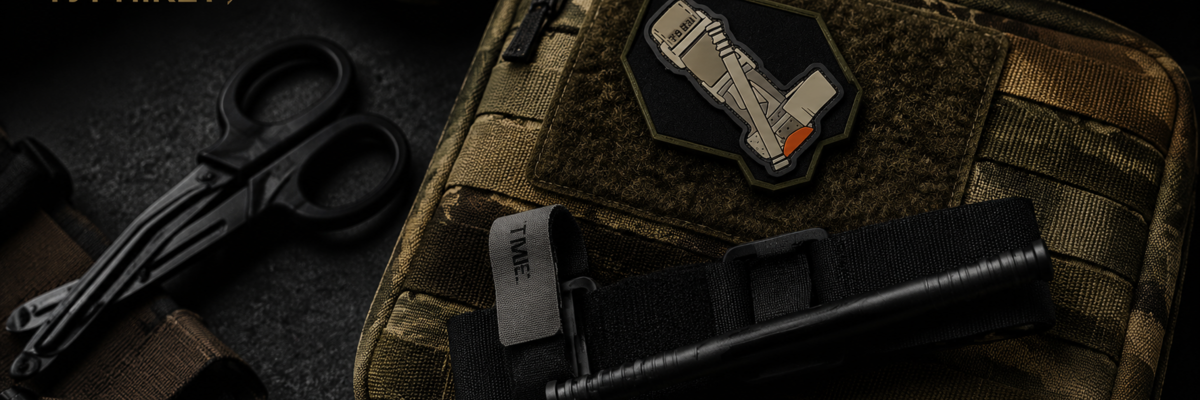
That is why we created the "Tourniquet" PVC patch.
The Sterling Silver "Tourniquet" Pendant
The Raccoon Merch collection also includes a sterling silver Tourniquet Pendant.
Its design is inspired by one of the most recognizable symbols of modern tactical medicine.
For some, it is a unique piece of jewelry.
Interesting Facts
-
The word tourniquet comes from French and literally refers to the act of turning or twisting.
-
Modern one-handed tourniquets became the global standard only in the 21st century.
-
Tourniquets are used not only by military personnel but also by police officers, firefighters, rescue teams, and emergency medical services worldwide.
-
Despite their compact size, tourniquets are considered one of the most important components of modern emergency medical equipment.
Conclusion
Over centuries of development, the tourniquet has evolved from a simple mechanical device into one of the defining symbols of modern tactical medicine.
Today it is carried by soldiers, combat medics, paramedics, and emergency responders around the world. Yet its true value lies not only in its design or engineering.
Behind every tourniquet are dedicated professionals—medics, instructors, soldiers, and volunteers—who devote themselves to learning, teaching, and saving lives.
Our Tourniquet patch and sterling silver pendant were created as a tribute to these people and to the professionalism, knowledge, and commitment that the modern tourniquet has come to represent.
- The MARCH Protocol: The Foundation of Modern Tactical Medicine
- Trauma Shears: Why They Became a Standard in Tactical Medicine
- The History of Military Dog Tags: From Identification to a Symbol of Military Service
- 15 Gift Ideas for Soldiers They Will Truly Appreciate
- What Should Be in a Soldier's Individual First Aid Kit? A Simple Guide to Modern Tactical Medicine
-
What to Give a Military Medic: 17 Gift Ideas for Combat Medics, Paramedics and Tactical Medics